Skip to content

Building a predictable pipeline is one of the hardest parts of running a young agency. You can have strong services, capable fulfillment, and ambitious goals, but without a repeatable agency lead generation system, growth can feel like starting over every morning.
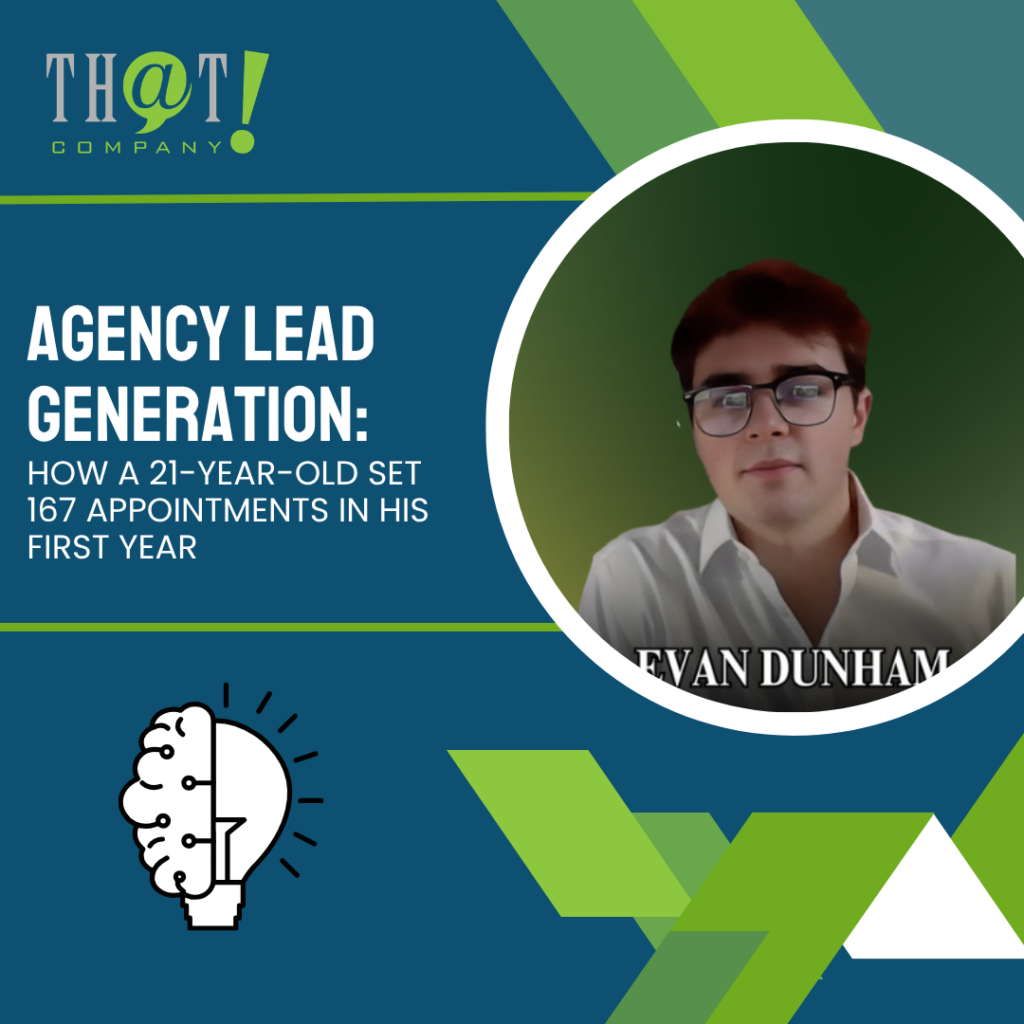
That was the challenge Evan, CEO of Crestify, faced during his first year in business. He started the agency while still a full-time college student, without a large budget, an established network, or previous experience running a company. Over the course of that first year, however, he set 167 appointments and began building the systems that turned inconsistent outreach into a repeatable sales process.
In this Mastermind Speaker Series session, Evan shared the mistakes, experiments, follow-up strategies, and small process improvements that made the biggest difference. If you prefer to watch the full conversation, the video below walks through the entire presentation. For agency owners who want the practical lessons, here are the ideas worth putting to work.
Agency Lead Generation Starts With a System, Not a Trick
One of Evan’s biggest lessons was straightforward: growth becomes much harder when every day is improvised.
Early in the agency, he tried a variety of approaches. He scraped prospect lists. He sent automated cold emails. He experimented with direct mail. He struggled through uncomfortable sales calls. And when someone finally showed interest, he booked meetings without doing much qualification beforehand.
There was plenty of activity, but activity is not the same thing as a system.
As Evan put it:
“It’s hard to grow when you don’t have a system.”
A useful lead generation process gives an agency something it can repeat, measure, and improve. Instead of asking, “What should I try today?” the owner knows what happens next when a prospect enters the pipeline.
That distinction matters because consistency creates data. Once you follow the same basic process repeatedly, you can see where leads are dropping off and improve that specific stage.
For Evan, some of the biggest improvements came from refining four areas:
- How prospects were initially contacted
- How leads were qualified
- How interested prospects were followed up with
- How prospects were nurtured before the sales meeting
None of those changes required a revolutionary new marketing channel. They required a better process.
Why Spray-and-Pray Cold Email Fell Short
Cold email was one of Evan’s first agency lead generation strategies.
Initially, the approach was built around volume. He would find companies, scrape information, identify email addresses, load prospects into an automated email platform, and place them into a multiday campaign.
The problem wasn’t necessarily cold outreach itself. It was the way the outreach was being done.
The messages were long. The real point often appeared near the bottom. And because the campaigns were heavily automated, it was difficult to show a prospect that someone had actually spent time considering their business.
That taught him an important lesson: more outreach does not automatically mean better outreach.
He still uses cold outreach, but his approach became shorter, more focused, and much more personal.
Sell the Reply, Not the Entire Engagement
One of the strongest ideas from the session was the concept of selling only the next step.
When agency owners get a response from a prospect, there is a temptation to explain everything immediately: SEO, PPC, social media, strategy, reporting, pricing, competitive advantages, and anything else that might convince the prospect to buy.
Evan found that approach often had the opposite effect.
The prospect’s guard went up because the conversation suddenly felt like a full sales pitch.
Instead, he began treating the process as a series of small commitments:
- The first outreach sells the response.
- The response sells a short qualification call.
- The qualification call sells the competitor analysis.
- The competitor analysis earns the opportunity to discuss services.
Only then does the conversation become about the larger marketing engagement.
That progression makes the sales process feel far more natural.
Your first message doesn’t have to close a monthly retainer. It simply has to make the prospect curious enough to continue the conversation.
The Contact Form Outreach Strategy That Changed His Results
One of Evan’s most productive prospecting methods turned out to be surprisingly simple: manually contacting businesses through the forms on their websites.
Instead of relying on large scraped email lists, he would search for businesses in a particular category and geographic area, visit their websites, and submit a short message through their contact forms.
His outreach was intentionally brief.
It started with a low-friction question:
“Are you able to handle more clients?”
From there, the message explained that his team helped businesses in that category attract more customers and offered to do some free work to demonstrate how they could help.
The goal wasn’t to explain an entire marketing strategy.
The goal was to start a conversation.
Evan reported sending roughly 250 to 500 contact-form messages per day, which could generate approximately one to two meetings per day.
The conversion rate wasn’t enormous, but that wasn’t the point. He preferred the method because the message was submitted directly through the prospect’s website and, in many cases, reached the business owner without requiring a scraped email database.
More importantly, the process was simple enough to repeat.
That repeatability is the real lesson.
A sustainable agency lead generation strategy does not always need to be sophisticated. It needs to create enough qualified conversations to justify the time invested.

Pre-Qualifying Prospects Protects Everyone’s Time
Generating more appointments sounds great until your calendar is filled with people who were never going to become clients.
Early in the process, Evan booked meetings with almost anyone who expressed interest.
He eventually realized that a meeting is not automatically a good meeting.
A short qualification call helped determine whether there was a real need, whether the prospect was serious about growth, and whether the expected investment was realistic.
One tactic Evan uses is simply discussing the typical investment before scheduling the full strategy conversation.
During the session, he gave an example of telling prospects that a normal engagement might fall around $750 to $1,000 per month, then asking whether that sounded feasible.
If the prospect clearly could not invest at that level, there was little reason to schedule a longer meeting.
If the answer was something like, “It depends on what I get,” the conversation could continue.
This protects both parties.
The prospect doesn’t spend time pursuing something outside their budget, and the agency’s sales team can focus its attention on conversations with a realistic chance of moving forward.
Call Interested Leads Before Sending Another Email
Speed became another important part of Evan’s follow-up system.
When someone responded positively to an outreach message, his recommendation was to call first rather than immediately starting another email exchange.
The conversation can be simple:
You received their message, figured a phone call would be easier, and want to know whether now is a bad time.
If they have a few minutes, you can conduct the basic qualification conversation immediately.
If they are busy, you can schedule a better time.
And if they don’t answer, leave a short voicemail and then follow up by email.
This creates momentum.
Instead of turning an interested prospect into a five-day email thread, the agency moves toward an actual conversation while the original outreach is still fresh in the prospect’s mind.

Build a Follow-Up System Instead of Relying on Memory
Most agency owners know they should follow up.
Far fewer have a defined rule for exactly what happens after a lead responds.
Evan developed a simple five-day process. Once someone expressed interest, he would call and email consistently in an effort to schedule the short qualification conversation.
If nothing was scheduled after five days, he stopped chasing.
His final message essentially acknowledged that the timing might not be right and left the door open for the prospect to reconnect in the future.
There are two benefits to this approach.
First, interested prospects receive enough attention that promising opportunities are less likely to disappear because someone forgot to follow up.
Second, the system creates a stopping point.
Following up forever is not a strategy. At some point, the agency owner’s time is better spent creating new opportunities.
The Small Change That Took Show Rates From 50% to 90%
Booking appointments eventually stopped being Evan’s biggest problem.
Getting people to actually attend those appointments became the bigger issue.
At one stage, only about half of scheduled prospects were showing up.
That meant a significant portion of the work required to generate those appointments produced no sales conversation at all.
The problem turned out to be the gap between booking and meeting.
A prospect might schedule an appointment four or five days in advance and hear nothing from the agency until the meeting arrived.
During that silence, enthusiasm faded. The meeting moved down the priority list. The prospect had very little additional reason to trust the agency.
The solution was a series of drip emails between the booking and the meeting.
Those messages provided useful information, answered common questions, built familiarity, and continued demonstrating value before anyone entered the sales call.
According to Evan, the result was dramatic: the show rate increased from roughly 50% to 90%.
That improvement affected the entire pipeline.
More attended appointments meant more conversations. More conversations created more proposals. More proposals created more opportunities to sign clients.
It was a reminder that agency lead generation should not be measured only by how many leads enter the top of the funnel.
Sometimes the fastest way to create more revenue is to stop losing the opportunities you already generated.

Use Pre-Meeting Marketing to Make Sales Easier
The drip-email strategy illustrates a broader principle: good marketing should make the eventual sales conversation easier.
Prospects often arrive at meetings with predictable concerns:
- Who does your agency normally work with?
- What exactly will happen in the meeting?
- Is any of the work outsourced?
- Can you actually help a company like mine?
- Why should I trust you?
Those questions can all be addressed before the sales meeting.
When prospects receive useful information ahead of time, they arrive better informed and more comfortable with the agency.
In other words, the sales rep does not have to build the entire relationship from zero during one 45-minute conversation.
Marketing has already done some of the work.
As the conversation in the session put it: you can make marketing easy and sales hard, or put more effort into marketing so sales becomes easier.
For a growing agency, the second option can be much easier to scale.
Don’t Just Name the Deliverable—Explain the Value
Another important sales lesson involved the competitor analysis Evan offers prospective clients.
Simply saying, “We’d like to give you a competitor analysis,” leaves too much unanswered.
What is in the analysis?
Why should the prospect care?
How will it help their business?
Instead, Evan learned to explain the outcome.
The analysis would look at two or three leading competitors, examine what they were doing in their marketing, identify what appeared to be working, review where their traffic was coming from, and use those insights to begin building a strategy for the prospect.
The deliverable did not change.
The perceived value did.
That distinction applies well beyond competitor research.
Agency owners sometimes become so familiar with their own services that they communicate in labels:
“SEO audit.”
“Paid media management.”
“Competitor analysis.”
“Social media management.”
Clients usually care much more about what those things help them accomplish.
Connect the service to the result, and the conversation becomes much easier to understand.
Centers of Influence Can Accelerate Agency Growth
Cold outreach wasn’t the only channel Evan discussed.
One of his newer growth opportunities came from developing centers of influence, or COI partnerships.
These are relationships with businesses or professionals who already serve the kinds of clients your agency wants to reach but are not direct competitors.
Evan’s first major partnership developed almost accidentally.
While prospecting trailer dealerships, someone from an inventory-management software company noticed that Evan was contacting the company’s clients and suggested that they might be able to work together.
Evan nearly dismissed the message because he was focused on finding clients rather than partners.
He eventually took the call.
The relationship later generated a referral that became an $1,800-per-month client.
Evan’s arrangement included a 10% commission for the lifetime of referred clients, giving the partner an ongoing reason to make introductions when appropriate.
The broader lesson is valuable for agencies: not every growth conversation needs to be with an end client.
A well-aligned referral partner may already have relationships with dozens or hundreds of businesses you would otherwise have to approach one at a time.
Look for Prospects Who Can Also Become Partners
Some industries can offer an additional advantage: they can become both clients and referral sources.
Video production companies came up as one example during the discussion.
A video company may need digital marketing for its own business, making it a potential client.
At the same time, it already works with companies investing in growth. Those clients may need SEO, paid advertising, social media, or other services to distribute and promote the content they are creating.
That creates a potential two-way relationship.
When evaluating markets for your agency, it can therefore help to ask two questions:
- Could this company become a client?
- Could this company also introduce us to other qualified businesses?
The best agency partnerships often create value in both directions.
You Don’t Necessarily Need to Niche Down on Day One
Evan also discussed whether a new agency should immediately specialize in one industry.
His agency had worked across a wide variety of markets, including home services, fishing guides, hunting guides, trailer dealerships, RV rental companies, chiropractors, schools, video production companies, and others.
His view was that new agency owners do not always need to niche down immediately.
Early experimentation can help you learn:
- Which industries respond to your outreach
- Which clients are enjoyable to work with
- Which businesses have realistic marketing budgets
- Which services produce strong results
- Which verticals create referral opportunities
A niche may become obvious after enough experience.
The important distinction is that your outreach can still be specific, even when the agency itself serves multiple industries.
Messaging to a fencing contractor should sound like it was written for a fencing contractor. Messaging to a video production company should reflect its business.
Relevance matters even without exclusivity.
Action Beats Perfection
The tactical advice was only part of Evan’s presentation.
Another major theme was the value of execution.
He spent eight or nine months experimenting before the pieces started coming together. Many days involved ten or twelve hours of work without an immediate payoff.
The turning point didn’t come from finding one magical tactic.
It came from continuing to test, refine, and repeat the process long enough to learn what worked.
That experience led to a simple philosophy:
“Action beats perfection.”
Agency owners can spend enormous amounts of time researching tools, rebuilding websites, rewriting offers, planning outreach, reorganizing CRMs, or trying to create the perfect strategy.
Some preparation is necessary.
But eventually, the work has to happen.
Send the message.
Make the call.
Conduct the meeting.
Review what happened.
Improve the process.
Then do it again.
Consistency Creates the Advantage
Evan also emphasized urgency and consistency as advantages smaller agencies can use against larger competitors.
A large organization may spend a week discussing a decision that a small agency can make in a day.
That speed adds up.
The same applies to prospecting.
One afternoon of outreach rarely changes a business. Ninety days of consistent outreach can.
One follow-up email isn’t a system. A defined follow-up process applied to every qualified lead is.
One good sales meeting doesn’t establish a predictable pipeline. Repeating and improving the same process does.
The goal is not random bursts of motivation.
It is creating business habits that continue even when the day feels ordinary.
The Bigger Lesson Behind 167 Appointments
The headline number from Evan’s first year is impressive: 167 appointments.
But the more useful lesson is how that number became possible.
It was not the result of a large existing network.
It wasn’t the result of an enormous advertising budget.
And it wasn’t one secret piece of software.
It came from building a process:
- Keep initial outreach short and focused on starting a conversation.
- Sell one next step instead of the entire service offering.
- Pre-qualify prospects before investing in longer meetings.
- Call interested leads quickly.
- Follow up consistently using a defined process.
- Keep prospects engaged between booking and meeting.
- Communicate the value of a deliverable, not just its name.
- Build relationships with centers of influence.
- Track what works and refine it.
- Stay consistent long enough to learn from the results.
That is what turns lead generation from a daily guessing game into an operating system.
Build an Agency That Doesn’t Depend on You Doing Everything
Eventually, a growing agency faces another question: who is going to deliver all the work created by a successful sales pipeline?
That is where the right white-label relationship can change the equation.
At That! Company, we help agencies expand their digital marketing capabilities without requiring them to build every fulfillment department internally. We can also support the sales process and communicate directly with clients under the agency’s brand, helping owners spend more time working on their agency instead of constantly working in it.
If you’re building the front end of your agency growth system and need a partner behind the scenes to help support that growth, explore our White Label Digital Marketing solutions.
The goal isn’t simply to book more meetings.
It’s to build a business that can confidently handle what happens after those meetings start turning into clients.