Skip to content

For many agencies, referrals are one of the best sources of new business. A recommendation arrives from someone the prospect already trusts, which can shorten the sales process, lower acquisition costs, and create an easier path to a new client relationship.
The problem? Most agencies leave referrals to chance.
A client happens to mention your agency to a colleague. Someone asks who handles their marketing. A business owner passes your name along. Those referrals are valuable, but they aren’t predictable.
Referral marketing for agencies becomes much more powerful when you stop treating it as something that simply happens and start building a repeatable system around it.
In this Mastermind session, we break down how agencies can create a referral program, make referring easier for clients, and build referral reminders into everyday client interactions.
Why Referral Marketing for Agencies Is So Valuable
Agencies shouldn’t rely exclusively on referrals. Predictable growth also requires marketing channels capable of consistently generating opportunities, including SEO, paid advertising, and other lead-generation strategies.
But referrals deserve a deliberate place in that mix.
One major advantage is cost per lead. A referral may cost practically nothing to generate, or it may require only a relatively modest incentive.
More importantly, referred prospects arrive with something other marketing channels have to work hard to establish: trust.
Someone they know has effectively said, “I’ve worked with these people. You should talk to them.”
That recommendation carries weight because the person making the referral is putting their own reputation behind it. Even the best testimonial or sales presentation has difficulty recreating the credibility of a recommendation from someone a prospect personally knows and trusts.
The goal, then, isn’t simply to hope satisfied clients talk about you.
It’s to make referrals easier and more consistent.
Start by Building a Clear Agency Referral Program
Before automating anything, define exactly what your referral program is.
It can be extremely simple. You might simply ask satisfied clients to introduce you to someone who could benefit from your services.
You can also create an incentive.
One example discussed in the session is a service credit tied to the value of the new client. If an existing client refers another company that signs up, the referring client could receive an equivalent credit toward a future month of service.
Other possibilities might include:
- A percentage or fixed service credit
- A flat referral bonus
- A gift card
- Another one-time incentive that matters to your client
The important point is that you don’t necessarily need to create an ongoing revenue-sharing arrangement.
Keep the offer easy to understand, establish clear terms, and make the incentive meaningful enough to encourage action without creating an unsustainable commitment.
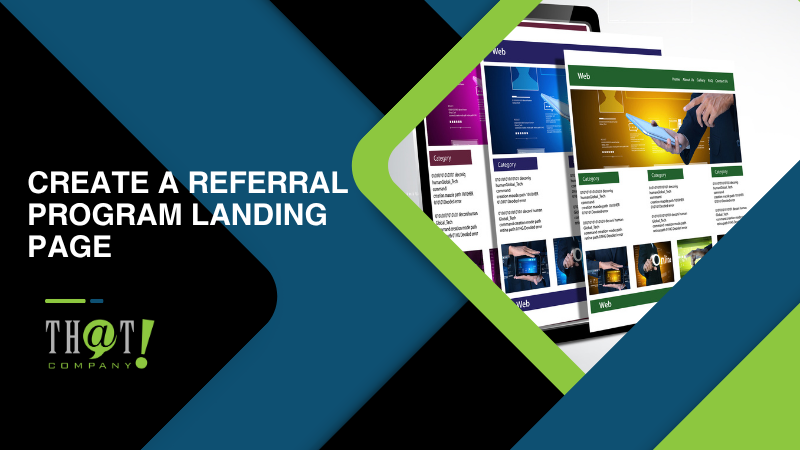
Create a Referral Program Landing Page
Once you’ve established your offer, give the program a permanent home on your website.
A dedicated landing page becomes the destination for nearly every referral promotion you’ll build later.
Start with a short video thanking clients for considering a referral. Explain the program in straightforward language: what they receive, what needs to happen for them to qualify, and what the referred company can expect.
Then answer the questions that could otherwise prevent someone from taking action.
Explain Exactly Who You Want to Meet
“Know anyone who needs marketing?” is a pretty broad request.
Give clients a clearer picture of your ideal referral.
Describe the types of businesses you serve, the problems you solve, and the characteristics of a strong potential client.
Then help them think through their networks.
Potential introductions could include:
- Friends or family who own businesses
- Professional colleagues
- Vendors or strategic partners
- Members of industry organizations
- LinkedIn connections
- Other business owners in their network
Specificity matters because an introduction that isn’t a good fit can create an uncomfortable experience for everyone involved.
Help clients identify people you can genuinely serve.
Remind Clients About Everything Your Agency Does
Clients don’t always understand the full scope of their agency’s services.
A PPC client may think of you exclusively as “the PPC agency.” They may have no idea that you also provide SEO, social media, reputation management, email marketing, web development, or other services.
Your referral page should clearly explain everything you offer.
That creates two opportunities.
First, clients have more reasons to recommend you. Instead of waiting until someone mentions PPC specifically, they can recognize several different problems for which your agency could be the answer.
Second, the reminder can uncover opportunities within the existing account.
A client reading about your SEO services, for example, might realize they should be having that conversation with you themselves.
A good referral program can support acquisition and expansion.
Protect the Referrer’s Reputation
There is another reason clients sometimes hesitate to make introductions: they’re putting their own reputation on the line.
If they introduce a colleague and your agency immediately launches into an aggressive sales pitch, you’ve potentially made the person who referred you look bad.
Instead, give the referred prospect something useful regardless of whether they become a client.
That could be a complimentary competitor analysis, audit, consultation, or another piece of genuinely useful expertise.
The message to your existing client becomes simple:
The person you introduce to us will receive value from the conversation whether they hire us or not.
That reassurance removes some of the risk from making an introduction.
Remember, referral marketing isn’t purely transactional. Relationships matter. Treat referred prospects well because that’s the right way to do business—and because every interaction reflects on the person who trusted you enough to make the introduction.
Remove the Work From Making an Introduction
Even a happy client may put off a referral because they don’t know what to write.
Solve that problem for them.
Include a simple email introduction template on your referral landing page that clients can copy, personalize, and send.
For example, the template can help them:
- Introduce the prospect to your agency.
- Briefly explain their experience working with you.
- Mention the complimentary value you’re offering.
- Copy the appropriate person from your team.
- Include a scheduling link if appropriate.
The easier the process becomes, the fewer reasons someone has to think, “I’ll do that later.”
And as most agency owners know, “later” has a remarkable habit of turning into “never.”

How to Automate Referral Marketing for Your Agency
Once your program and landing page exist, the next step is distribution.
This is where referral marketing becomes a system instead of an occasional campaign.
Rather than relying entirely on your team to remember to ask for referrals, build reminders into communication that’s already happening.
1. Add the Referral Program to Email Signatures
Your team sends emails every day.
That makes email signatures one of the simplest places to continuously promote the referral program without creating another marketing campaign.
A short line can be enough:
Want a free month of service? Ask me about our referral program.
Better yet, link directly to the referral program landing page so clients can immediately see how it works.
Now every normal client email creates a passive opportunity to remind someone that referrals are welcome.
2. Include Referral Reminders on Invoices
There’s an obvious moment to tell clients how they could reduce their next bill: when they’re looking at the current one.
Add a brief referral message to your invoice template.
For example:
Refer a new client and you could receive a free month of service. Learn more about our referral program.
The client sees the reminder month after month without anyone on your team needing to remember to send it manually.
That’s what good automation looks like: small, consistent actions built into processes you’re already running.
3. Ask After You Achieve a Client Milestone
One of the best moments to mention your referral program is immediately after you’ve delivered a meaningful result.
Agencies sometimes underplay their wins because success feels routine internally.
Your team might look at a keyword reaching page one and think, “That’s what we’re supposed to do.”
Your client may see it very differently.
Celebrate the milestone.
Tell them what happened, why it matters, and acknowledge the progress you’ve made together.
Then, while that value is fresh, remind them about your referral program.
The timing matters. A client who is excited about a result today may naturally feel motivated to recommend you. Wait several weeks, and that emotional momentum may disappear.
4. Use Above-and-Beyond Moments
The same principle applies when your agency does something exceptional for a client.
In the session, we shared an example from our own experience where our team helped solve a major technical issue outside the normal scope of marketing services. The client’s website was down during a critical sales period, and our team worked late into the night to help get it back online.
Those moments create enormous goodwill.
Make sure clients understand the additional value you’ve provided. One approach we’ve used is documenting out-of-scope work on an invoice while reducing the amount due to $0, clearly showing the client what was done without charging them for the extra effort.
Then, while the experience is fresh, you can remind them about referrals.
The lesson isn’t to hold good service hostage until somebody gives you a lead. Quite the opposite.
Deliver exceptional service first. Then make the referral opportunity visible while the value of that service is still top of mind.
5. Send a Quarterly Email to Happy Clients
Not every referral request needs to be passive.
Consider having account managers send a personalized referral email to satisfied clients once per quarter.
The account manager is important.
The request shouldn’t necessarily come from a generic sales inbox or a person the client barely knows. It should come from someone who has an established relationship with the client and understands their account.
Begin by recapping what you’ve accomplished together during the quarter.
Highlight specific progress.
Then make an intentional ask.
You might ask the client to spend a few minutes thinking about someone in their network who could benefit from the same kind of help.
This process also supports retention because you’re regularly reminding clients of the progress being made on their account.
And if their perception doesn’t match yours, you’ve created an opportunity to discover that before a small concern becomes a big retention problem.
Referrals Aren’t the Only Ask You Can Make
A quarterly client touchpoint doesn’t always need to ask for an introduction.
Change the request based on the relationship and what’s happening within the account.
For example, you might ask for:
- A referral
- An online review
- A testimonial
- A conversation about an additional service
- Feedback about the relationship
Suppose you’ve generated thousands of leads through paid social advertising and the client has accumulated a substantial email database but isn’t doing email marketing.
That’s a logical moment to discuss expanding the relationship.
The principle is the same: look at the value you’ve created and determine the most appropriate next ask.

Build Referral Marketing Into Your Agency’s Habits
The most important lesson is that referral marketing doesn’t have to remain random.
You can create systems around it.
Start with a defined program and dedicated landing page. Give clients a reason to participate, clearly explain who you’d like to meet, and make introductions easy.
Then create recurring opportunities for clients to encounter the program:
- Email signatures
- Invoices
- Client milestones
- Above-and-beyond service moments
- Quarterly account-manager outreach
None of these tactics needs to be particularly complicated.
Together, however, they transform referrals from something your agency occasionally receives into something your business deliberately encourages.
Key Takeaways
Referral marketing for agencies works because it builds on something that’s difficult to manufacture: trust.
A strong program doesn’t replace SEO, PPC, outbound sales, or other predictable acquisition channels. Instead, it helps your agency capture more value from the strong relationships you’re already building.
The biggest lessons are straightforward:
- Create a clearly defined referral program.
- Make the incentive easy to understand.
- Explain exactly who makes a good referral.
- Give referred prospects genuine value.
- Provide templates that make introductions simple.
- Promote the program through existing client touchpoints.
- Ask for referrals when client satisfaction is at its highest.
- Let the client’s account manager make personalized requests.
- Use the same relationship-building process to generate reviews, feedback, and expansion opportunities.
Most importantly, keep delivering work worth talking about.
Referral systems amplify great client relationships; they don’t replace them.
And if growing your agency is creating more delivery work than your internal team can comfortably handle, a White Label Digital Marketing partner can help you expand capacity while keeping your agency at the center of the client relationship. At That! Company, we can support the sales process and communicate directly with clients under your brand, giving you more time to work on your agency instead of constantly working in it.