Skip to content


Generating leads is only half the battle. If those opportunities reach a sales call but rarely turn into paying clients, adding more leads may simply mean adding more missed opportunities.
Improving your sales call close rate starts with changing what happens during the conversation. Instead of treating the call as an opportunity to explain everything your agency does, the goal is to understand the prospect, uncover what is really holding them back, demonstrate expertise, and connect your solution directly to their needs.
In this Mastermind session, sales coach and entrepreneur Matt Wolach shares the sales process he developed after running thousands of demos and sales conversations. He calls it the Perfect DEAL Process: Discover, Educate, Associate, and Lead.
Prefer to hear Matt explain the process himself? Watch the session below. Otherwise, here’s how the framework works—and how agencies can apply it to their own sales conversations.
Why Your Sales Process Can Be a Competitive Advantage
Digital marketing agencies face an interesting sales problem: from a prospect’s perspective, many agencies can sound remarkably similar.
An SEO agency says it can improve rankings and traffic. A PPC agency promises better campaigns and more leads. A social media agency talks about increasing reach and engagement.
And the agency down the street may be saying almost exactly the same thing.
Matt’s argument is that differentiation doesn’t have to come entirely from the service itself. Your sales process can become part of your differentiation.
A prospect who feels deeply understood has a fundamentally different experience from one who sits through a generic capabilities presentation.
Instead of immediately explaining your services, your sales conversation should answer questions such as:
- What is this prospect actually trying to accomplish?
- Why do they want this service now?
- What problems are preventing them from reaching their goals?
- What is the business impact of those problems?
- How does your specific approach address their situation?
That shift turns the sales call from a pitch into a consultation.

The Perfect DEAL Process for Improving Your Sales Call Close Rate
Matt organizes his sales methodology around four stages:
- Discover what is really happening with the prospect.
- Educate them about something valuable and relevant to their situation.
- Associate your solution directly with their problems and goals.
- Lead them confidently toward the appropriate next step.
The order matters.
A common mistake is jumping straight from “Hello” to “Here’s what we do.” The DEAL framework delays that conversation until you’ve earned the right to have it.
1. Discover: Understand Before You Sell
Discovery is more than qualification.
Yes, you need to determine whether the prospect is a good fit. But Matt identifies several additional purposes for discovery: building a personal connection, establishing trust, and helping the prospect understand the seriousness of the problem they’re facing.
That requires better questions.
Imagine a prospect comes to your agency and says, “We’re looking for help with SEO.”
The easiest response is to start explaining your SEO services.
The better response is to ask why.
What are they trying to rank for? What has their team already tried? How long has organic growth been stagnant? What would increased visibility mean to the business? How much revenue could they be missing because their ideal customers can’t find them?
The stated need—”we need SEO”—is only the beginning.
Find the Problem Behind the Problem
Prospects don’t always diagnose their own problems correctly.
That’s normal. If they already knew exactly what was wrong and how to solve it, there would be less reason to speak with an expert.
Your job during discovery is to dig deeper.
A prospect may think their problem is poor rankings. Further discussion could reveal that the bigger issue is an inconsistent pipeline that has made the company overly dependent on referrals.
Or someone asking for PPC help may believe the ads themselves are the issue when the real problem is poor conversion after the click.
The salesperson’s job isn’t simply to accept the first diagnosis. It’s to understand the business well enough to uncover what’s really happening.
Make the Cost of Inaction Concrete
One of Matt’s most memorable lessons is that identifying a problem isn’t enough. The prospect also needs to understand what that problem is costing them.
That might include:
- Wasted advertising spend
- Hours spent trying to manage marketing internally
- Lost leads
- Missed revenue
- Delayed growth
- Time pulled away from higher-value work
- Personal frustration or longer working hours
When possible, quantify the impact.
If someone has spent two hours every day for months trying to fix campaigns that still aren’t producing results, those hours have a cost. So does the advertising budget that didn’t generate a return. And so do the opportunities the business missed during that period.
This isn’t about manufacturing fear. It’s about making an existing business problem visible enough to evaluate honestly.
As Matt explains, prospects often live with problems for so long that those problems begin to feel normal. A strong consultant helps them see the true impact.
Go Deeper With Your Discovery Questions
Matt recommends having discovery questions prepared rather than improvising the entire conversation.
Your questions should uncover areas such as the prospect’s current situation, pain points, goals, previous attempts, resources, timing, and business impact.
But don’t turn the call into an interrogation.
The point isn’t to race through a checklist. Listen to each answer and ask relevant follow-up questions. That’s often where the most useful information emerges.
2. Educate: Give Value Before You Pitch
After discovery, there’s still another step before presenting the solution: education.
Matt recommends spending a few minutes teaching the prospect something useful about their market, industry, or situation.
Importantly, this isn’t the time to educate them about how wonderful your agency is.
Instead, explain something happening around them.
For example, you might discuss a shift in search behavior, an important change affecting paid media performance, or an industry trend changing how customers evaluate businesses.
Done well, this accomplishes several things at once.
It demonstrates expertise without requiring you to announce, “We’re experts.” It gives the prospect immediate value from the conversation. And it changes the dynamic from salesperson-versus-buyer to advisor-and-client.
That distinction matters.
Most buyers know when a pitch is coming. Their guard naturally goes up. Useful education can lower that resistance because you’re helping before asking them to buy anything.
The best expertise is often demonstrated rather than declared.
3. Associate: Connect Your Solution to Their Specific Problem
Now you’ve earned the opportunity to talk about what you do.
But this still shouldn’t become a generic agency presentation.
The Associate stage means connecting specific elements of your service to specific things the prospect told you during discovery.
Suppose a prospect told you earlier that they have no idea whether their paid campaigns are actually profitable.
Later, instead of saying:
“We provide detailed reporting.”
Connect the reporting directly to their problem:
“You mentioned earlier that you haven’t had a clear view of which campaigns are producing results. Our reporting is designed to solve that by showing you what’s happening, why it’s happening, and what we’re changing based on the data.”
Same feature. Completely different sales experience.
The second version matters because the prospect immediately understands why it matters to them.
Make Your Sales Presentation Flexible
This is why rigid sales scripts can become a problem.
Two prospects interested in the same service may have completely different motivations.
One CEO may care primarily about revenue growth. A marketing manager may care about execution and visibility. Another business owner may simply want to stop spending ten hours a week trying to manage marketing personally.
Your presentation should change accordingly.
Use your discovery notes throughout the conversation. Refer back to what the prospect said. Focus heavily on the parts of your service that address their priorities, and spend less time on features that aren’t particularly relevant.
Personalization itself becomes part of the differentiation.
When the prospect thinks, “They understand exactly what we’re dealing with,” you’ve created an advantage that a generic pitch deck can’t replicate.
4. Lead: Don’t Make the Prospect Figure Out What Happens Next
The final stage is Lead.
For many salespeople, this is uncomfortable because it requires taking control of the process.
But being consultative doesn’t mean being passive.
If you’ve taken the time to understand the prospect’s situation and genuinely know how to solve the problem, you’re in a position to recommend what should happen next.
Matt compares this to working with a personal trainer. You don’t hire an experienced trainer and then dictate every exercise yourself. You explain what you’re trying to accomplish, and you expect the expert to recommend the appropriate path.
Agency sales should work similarly.
A prospect may arrive convinced they need one particular tactic. After discovery, you may realize that isn’t actually the best solution.
Being the expert sometimes means saying so.
Be Firm but Friendly
Leading doesn’t mean pressuring someone into a bad decision.
It means providing clear guidance.
Explain what you recommend, why you recommend it, and what the next steps look like. When appropriate, speak confidently about moving forward rather than filling the conversation with uncertainty.
Matt describes the right balance as “firm but friendly.”
That’s an important distinction. Prospects don’t want to be strong-armed, but they also aren’t looking for an expert who refuses to have an opinion.
A good sales process gives buyers clarity.
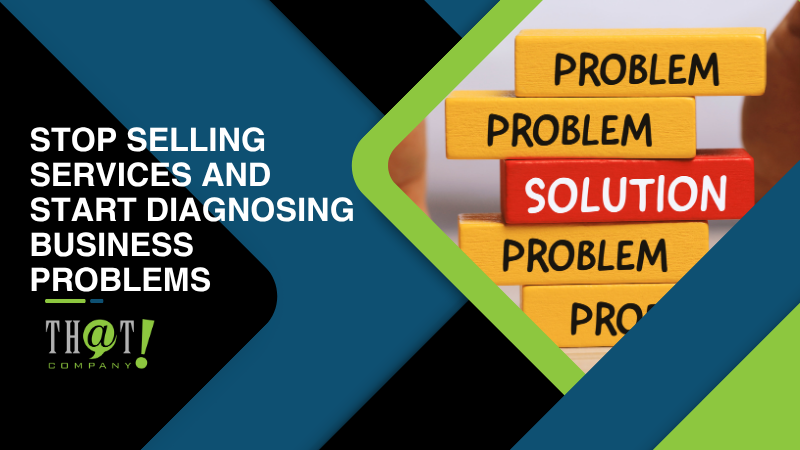
Stop Selling Services and Start Diagnosing Business Problems
The larger lesson behind the DEAL process is simple: the prospect should remain the focus of the sales call.
Agency owners naturally want to talk about what makes their company impressive. Certifications. Technology. Processes. Reporting. Years of experience. Case studies.
Those things can matter.
But they matter most when they’re connected to something the prospect already cares about.
Discovery tells you what matters.
Education establishes expertise.
Association shows why your solution fits.
Leadership gives the prospect a clear path forward.
Put those pieces together, and your sales conversation becomes much more difficult for a competitor to duplicate—even when that competitor offers similar services.

Build a Sales Process Your Team Can Repeat
A strong sales process becomes even more important as an agency grows.
Founders often sell intuitively. They’ve delivered the service, worked directly with clients, and understand immediately how a particular capability connects to a client’s problem.
New salespeople don’t automatically have that knowledge.
Document it.
Your team should understand which parts of your solution address which client problems. They should know the questions that uncover those problems and the follow-up questions that help prospects understand their impact.
They should also know how the conversation changes depending on who they’re speaking with.
That creates a repeatable sales system rather than relying on one naturally talented closer.
And don’t forget to measure it.
Matt recommends tracking sales performance so you know your actual close rate and can identify whether changes to the process are improving results. Without measurement, “we seem to be closing more” is just a feeling.
Key Takeaways for Improving Your Sales Call Close Rate
You don’t necessarily need more leads to generate more revenue. Sometimes the larger opportunity is improving what happens with the leads you already have.
Matt Wolach’s Perfect DEAL Process provides a straightforward framework:
- Discover the prospect’s true situation, goals, and pain.
- Educate them with useful insights that demonstrate expertise.
- Associate your solution directly with what you learned.
- Lead the prospect confidently toward the right next step.
For agencies, there’s another lesson worth remembering: your sales process is part of your client experience.
The way you listen, diagnose, educate, and communicate before someone becomes a client gives them an idea of what working with you will feel like afterward.
And if sales capacity is becoming a bottleneck as your agency grows, the answer doesn’t always have to be building every capability internally. A White Label Digital Marketing partner can give agencies additional support behind the scenes—including sales support and direct client communication under the agency’s brand—so agency leaders can spend more time working on the business instead of being pulled into every part of the business themselves.
A better close rate starts well before you ask for the sale. It starts with running a conversation worth saying yes to.