Skip to content


Marketing return on investment (ROI) measures the profit earned from your marketing spend. Knowing your marketing ROI helps you allocate your budget effectively and improve campaign performance. In this article, we’ll show you how to calculate marketing ROI and offer strategies to maximize it.
Key Takeaways
- Marketing ROI quantifies the effectiveness of marketing efforts, enabling businesses to track performance, make informed decisions, and optimize budget allocation.
- Key metrics such as Customer Acquisition Cost (CAC), Return on Ad Spend (ROAS), and Lifetime Value (LTV) are essential for analyzing marketing effectiveness and justifying expenditures.
- Continuous measurement and analysis of marketing ROI are crucial for improving strategies, optimizing resource allocation, and achieving sustained profit and revenue growth.
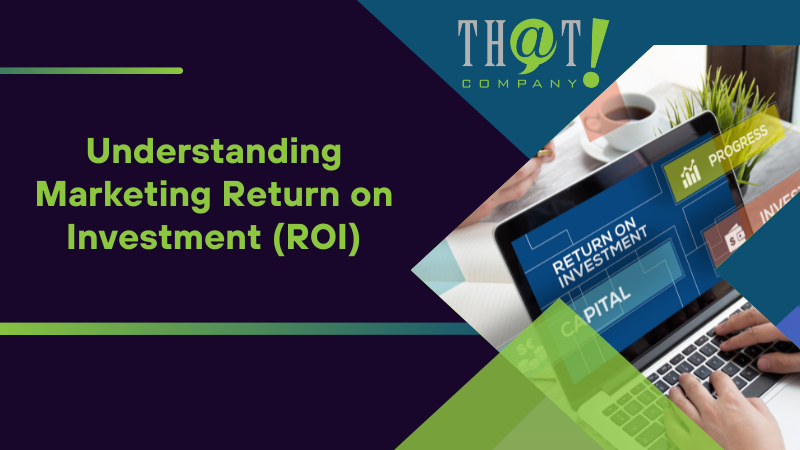
Understanding Marketing Return on Investment (ROI)
Marketing ROI quantifies how marketing programs and campaigns contribute to revenue generation, making it a crucial metric for assessing the efficiency of marketing spend. Evaluating marketing performance helps businesses determine if their efforts are boosting profit and driving revenue growth. This understanding is vital for properly distributing the marketing budget, ensuring that each dollar is spent on initiatives that yield the highest returns. Additionally, marketing roi measurements provide valuable insights into the effectiveness of these strategies.
At its core, marketing ROI measures the profit earned from every dollar spent on marketing. This metric helps businesses track performance, impact, and profitability, supporting informed decision-making and forecasting future revenues. Consistent measurement of ROI allows marketers to establish baselines, gauge success, and adjust efforts to meet their marketing objectives.
To achieve sustained profit and revenue growth, marketers must set clear goals based on their understanding of marketing ROI. These goals guide data-driven strategies that optimize budget allocation and improve marketing effectiveness. Whether through direct or indirect attribution methods, insights from evaluating marketing ROI are key to refining future marketing efforts.

Why Agencies Partner with That! Company for White Label PPC Services
Agencies often face the challenge of expanding their service offerings without incurring significant costs or overwhelming their resources. This is where That! Company’s services as a white label PPC management company come into play. Partnering with That! Company allows agencies to outsource complex tasks like pay-per-click management while preserving their brand identity. This allows them to meet tight deadlines, provide expert solutions, and deliver high-quality results to their clients.
One major advantage of white label services is the cost savings on recruitment and resources. Agencies can leverage the expertise of That! Company’s dedicated team of PPC experts, who handle every aspect of pay-per-click management, from keyword research to bid optimization. This not only ensures the success of campaigns but also helps agencies build long-term relationships with their clients by delivering quick and organized results.
Trust and transparency are crucial in these partnerships. Clear communication between agencies and white label providers like That! Company significantly impacts the success of projects. Maintaining personalized branding and high-quality service helps agencies preserve their brand value while benefiting from That! Company’s expert solutions.

Why Measure Marketing ROI?
Measuring marketing ROI is essential for identifying the right mix of campaign efforts and establishing baselines for future success. Calculating marketing ROI allows businesses to measure campaign effectiveness and profitability, guiding decisions and optimizing strategies. This data-driven approach ensures that marketing efforts are aligned with business goals and deliver maximum impact.
Justifying marketing spend is another critical reason for measuring ROI. To secure the necessary budget and resources for future campaigns, marketers must demonstrate the ROI their efforts are delivering. Monitoring and analyzing success indicators play a pivotal role in this process, helping marketers gauge success and adjust their strategies to maximize impact.
A well-measured marketing ROI supports a data-driven marketing plan, allowing marketers to make informed decisions that enhance campaign performance and overall business success. Accurate measurement of marketing ROI enables businesses to optimize efforts, justify spending, and achieve better results with each campaign.

Calculating Marketing ROI
Calculating marketing ROI involves a straightforward formula: ROI = (Growth in Sales – Marketing Costs) / Marketing Costs × 100. This formula highlights the importance of considering all marketing costs, including creative development, personnel, agency fees, and overhead, to get an accurate calculate marketing roi measurement. Subtracting marketing costs from sales growth helps businesses determine the profitability of their marketing efforts.
For example, an ROI of 400% indicates that for every dollar spent, four dollars are earned in return. This percentage increase in sales against marketing expenditure provides a clear picture of the effectiveness of marketing campaigns. Understanding this calculation helps businesses make informed decisions about their marketing investments and optimize their strategies for better results.
To ensure accurate ROI measurement, businesses must track all related costs and revenue generated from their marketing initiatives. This comprehensive approach to calculating marketing ROI supports data-driven decisions that enhance marketing performance and profitability.
Key Metrics for Measuring Marketing ROI
Several key metrics play a crucial role in measuring marketing ROI and assessing the effectiveness of marketing campaigns. These metrics include Customer Acquisition Cost (CAC), Return on Ad Spend (ROAS), and Lifetime Value of a Customer (LTV). Each of these metrics provides valuable insights into different aspects of marketing performance, helping businesses justify their marketing expenditures and optimize their strategies.
Customer Acquisition Cost (CAC)
Customer Acquisition Cost (CAC) represents the total cost associated with acquiring a new customer. It is calculated by dividing the sum of marketing and sales costs by the number of new customers acquired during a specific period. For instance, if the total costs are $2000 and 10 new customers are acquired, the CAC is $200.
Understanding CAC is essential for assessing the efficiency of marketing spending. By analyzing this metric, businesses can determine whether their marketing dollars are being used effectively to attract new customers. This insight helps in optimizing marketing strategies and improving overall marketing ROI.
Return on Ad Spend (ROAS)
Return on Ad Spend (ROAS) is a metric that assesses revenue. It indicates how much revenue is generated for each dollar spent on advertising. It is calculated by dividing the revenue from ad campaigns by the ad spending. For example, generating $5 for every $1 spent on an advertising campaign indicates a highly efficient ad strategy.
ROAS plays a significant role in guiding future marketing investments. Understanding the effectiveness of advertising strategies allows businesses to allocate budgets more effectively, focusing on high-return campaigns.
This optimization leads to improved good marketing roi and better overall performance.
Lifetime Value of a Customer (LTV)
Lifetime Value of a Customer (LTV) measures the total revenue a business can expect from a single customer account over the lifetime of the relationship. For example, if the average purchase value is $50, the average purchase frequency is every three months, and the average duration a customer stays with the business is five years, the LTV can be calculated accordingly.
LTV is crucial for long-term strategy planning. Understanding customer lifetime value enables businesses to make informed decisions about relationship management and marketing investments.
Tools like Google Analytics and Kissmetrics can help calculate LTV and provide insights into the most valuable marketing channels.
Challenges in Measuring Marketing ROI
Measuring marketing ROI comes with its own set of challenges. One significant challenge is attributing revenue to specific campaigns, especially when multiple marketing channels contribute to conversion rates. Determining the impact of each channel can be complex, requiring sophisticated attribution models and data analysis.
External factors like product quality, brand reputation, and market conditions can also impact the effectiveness of marketing efforts. These factors can complicate the calculation of marketing ROI, making it difficult to isolate the effects of marketing activities alone. Additionally, accurately determining marketing costs can be challenging due to overlapping expenses across various channels.
Despite these challenges, businesses can overcome them by regularly collecting and analyzing data, using advanced analytics tools, and adopting a comprehensive approach to measuring marketing performance. This ensures a more accurate and reliable measurement of marketing ROI.

Improving Marketing ROI
Improving marketing ROI requires a multifaceted approach that includes focusing marketing roi measurements, analyzing current performance, optimizing strategies, and adjusting budget allocation. Continuous measurement of marketing ROI fosters a culture of ongoing improvement and adaptation to market changes.
Identifying the best-performing tactics and refining marketing efforts are key to maximizing the effectiveness of the marketing campaign.
Analyzing Current Performance
Regular analysis of marketing performance helps businesses identify which strategies yield the highest returns and optimize their marketing investment mix. For example, email marketing boasts an impressive return of $42 for every dollar invested, leading to a staggering 4,200% ROI. Email accounts for nearly 20% of all online transactions, showcasing its significant impact on sales.
Continuous performance analysis helps businesses identify high-performing tactics like email marketing and refine their marketing mix for better returns. This ongoing assessment ensures that marketing efforts are aligned with business goals and deliver maximum impact.
Optimizing Strategies
Implementing A/B testing is a powerful method for fine-tuning marketing efforts. Comparing different campaign versions helps marketers identify what works and what doesn’t, allowing strategy refinement for better results. This iterative process ensures that campaigns are effective and aligned with business goals.
Continuous optimization based on ROI insights is critical for maximizing campaign effectiveness. Regularly refining marketing strategies ensures efforts are always geared towards achieving the highest returns.
Adjusting Budget Allocation
Regularly assessing marketing return on investment allows organizations to make informed decisions about budget allocation and resource optimization. Understanding which platforms generate the most revenue allows marketers to allocate budgets more effectively. For example, analyzing whether native ads are driving conversions and ROI, while display ads fall flat, can influence budget allocation decisions.
Conducting a Data, Management, and Sophistication (DMS) Audit can help analyze marketing budgets and ensure that spending is aligned with business goals. This audit considers factors such as data availability, management support, sophistication, and scale of investment, providing a comprehensive view of budget allocation strategies.

Real-World Examples of Marketing ROI
Successful marketing campaigns from companies like McDonald’s, Apple, and Nike highlight the importance of strategic marketing in achieving significant returns on investment. These real-world examples provide practical insights into the effectiveness of marketing strategies and their ROI.
Email Marketing
Targeted email campaigns can achieve high ROI through personalization and segmentation. Personalization in email marketing can increase click-through rates by up to 14% and conversion rates by 10%. Companies that segment their email lists can increase their revenue from email campaigns by as much as 760%.
Email marketing is a powerful tool that can achieve high ROI through targeted campaigns. Personalizing and segmenting email campaigns allows businesses to optimize marketing efforts and achieve better results.
Content Marketing
Content marketing is a strategic approach that centers on creating and sharing valuable content to attract and engage a well-defined audience. Companies that prioritize content marketing see conversion rates that are six times higher than those that do not. By investing in quality content, businesses can generate more client leads and subscriptions, leading to measurable growth in client engagement.
The effective implementation of content marketing can significantly enhance the number of client leads generated and subscriptions obtained. By focusing on creating valuable and relevant content, businesses can build stronger relationships with their audience, ultimately leading to higher conversion rates and increased client loyalty.

Tools for Tracking and Improving Marketing ROI
Tracking marketing ROI is crucial for connecting customer data with money spent and earned. Marketing analytics tools unify attributions and provide clearer insights for accurate measurement. Platforms like Shopify house data and provide insights into funnels and campaign performance, making it easier for businesses to track and analyze their marketing efforts.
User-friendly reports and pre-built dashboards are features of platforms that aid in tracking ROI. These tools help businesses monitor their marketing performance and make data-driven decisions to optimize their strategies. By leveraging advanced analytics tools, businesses can gain a comprehensive understanding of their marketing ROI and make informed decisions to improve their marketing effectiveness.
White label PPC services, such as those provided by That! Company, enable agencies to resell advertising services under their brand, allowing for expanded offerings without investing heavily in additional resources. That! Company provides a dedicated team of PPC experts and handles customer interactions directly, enhancing service quality. Successful white label PPC campaigns require ongoing monitoring and optimization to improve effectiveness and ROI.

Summary
Understanding and maximizing marketing ROI is essential for businesses aiming to achieve sustained growth and profitability. By quantifying the contribution of marketing programs to revenue generation, businesses can make informed decisions about their marketing investments and optimize their strategies for better results. Key metrics such as Customer Acquisition Cost (CAC), Return on Ad Spend (ROAS), and Lifetime Value of a Customer (LTV) play a crucial role in measuring marketing ROI and assessing the effectiveness of marketing campaigns. Working with a white label ad agency can further enhance these efforts by providing expert support and scalable solutions without the need to build in-house capabilities.
Despite the challenges in measuring marketing ROI, businesses can overcome them by regularly collecting and analyzing data, using advanced analytics tools, and adopting a comprehensive approach to measuring marketing performance. By continuously improving their marketing strategies and adjusting budget allocations based on ROI insights, businesses can achieve higher returns on their marketing investments. Remember, the journey to mastering marketing ROI is ongoing, but with the right tools and strategies, you can unlock the full potential of your marketing efforts.

Frequently Asked Questions
What is the formula for calculating marketing ROI?
To calculate marketing ROI, use the formula: ROI = (Growth in Sales – Marketing Costs) / Marketing Costs × 100. This allows you to assess the effectiveness of your marketing investments.
Why is measuring marketing ROI important?
Measuring marketing ROI is essential for optimizing strategies and justifying expenditures, enabling informed business decisions that drive growth. By understanding ROI, companies can allocate resources more effectively.
What are the key metrics for measuring marketing ROI?
To effectively measure marketing return on investment, focus on key metrics such as Customer Acquisition Cost (CAC), Return on Ad Spend (ROAS), and Lifetime Value of a Customer (LTV). These metrics provide a clear picture of your marketing effectiveness and profitability.
What challenges do businesses face in measuring marketing ROI?
Businesses struggle with measuring marketing return on investment due to difficulties in attributing revenue to specific campaigns, accounting for external factors, and accurately assessing marketing costs. These challenges can complicate the evaluation of marketing effectiveness and investment decisions. Partnering with a PPC white label provider can help streamline campaign management and reporting, making ROI tracking more efficient and transparent.
How can businesses improve their marketing ROI?
To enhance marketing ROI, businesses should analyze performance metrics, refine their marketing strategies, and allocate budgets informed by ROI insights. This targeted approach ensures that resources are effectively utilized for maximum impact.