Skip to content

Most agencies are trying to win more clients by chasing more leads. But what if one relationship could open the door to dozens—or even hundreds—of better-fit opportunities?
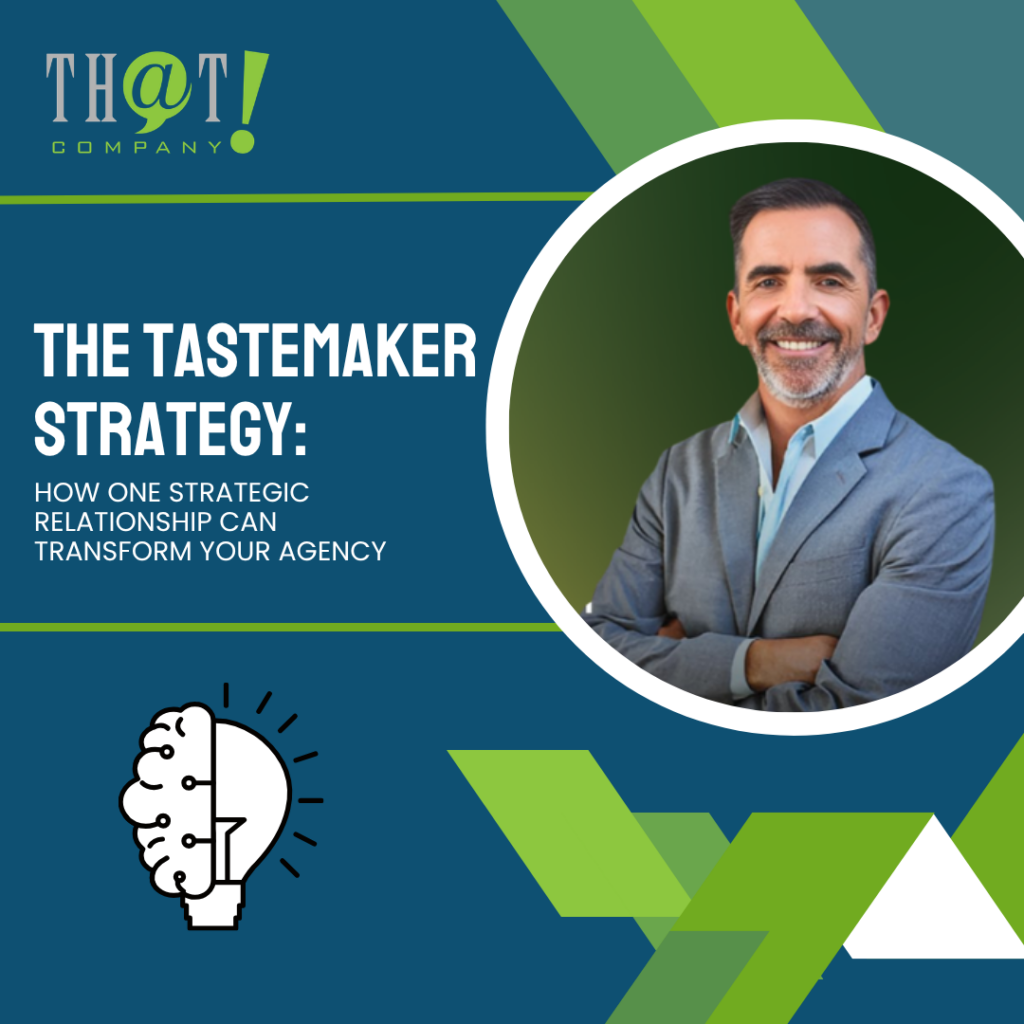
In this Mastermind session, Corey Quinn, agency growth strategist and author of Anyone, Not Everyone, introduced what he calls The TasteMaker Strategy: a relationship-driven approach to agency business development that focuses on earning trust with the people and brands your ideal clients already listen to. Corey shared how one “tastemaker” relationship helped Scorpion grow rapidly in the franchise space, ultimately contributing to more than 100 franchise brand relationships.
For agency owners looking for a smarter, more scalable growth strategy, this session is worth watching. This article breaks down the biggest lessons from the conversation and how you can apply them inside your own agency.
What Is The TasteMaker Strategy?
The TasteMaker Strategy is the process of building intentional relationships with the trusted voices, respected brands, and influential organizations inside your target vertical.
Corey defines a tastemaker as “the goose that lays the golden eggs.” In this analogy, the golden eggs are your ideal clients. The tastemaker is the person, brand, or organization that already has access to them, influence over them, or credibility in their world.
For agencies, tastemakers can include:
- Industry-leading brands
- Association leaders
- Consultants and coaches
- Popular speakers or authors
- Podcast hosts
- Conference organizers
- Well-connected executives
- Influential clients inside a niche
The goal is not to pitch them immediately. The goal is to build trust, provide value, and become associated with the people your ideal clients already respect.
That distinction matters. This is not a quick lead generation trick. It is a long-term business development strategy built on relationships, credibility, and market positioning.
Why One TasteMaker Can Change Your Agency’s Growth Trajectory
Corey shared a powerful example from his time as Chief Marketing Officer at Scorpion. The agency had one major franchise client: The Grounds Guys, which was owned by Neighborly, formerly known as The Dwyer Group.
Scorpion knew that if they delivered outstanding work for The Grounds Guys, it could lead to more opportunities within the Neighborly portfolio. But the bigger opportunity was market credibility.
Neighborly was highly respected in the franchise and home services space. Other franchise brands looked to them as a model. By becoming known as the agency that worked with Neighborly, Scorpion gained validation in the market. That relationship created referrals, introductions, references, and trust that would have been difficult to manufacture through cold outreach alone.
The result? Within roughly two years, Scorpion had relationships with more than 100 franchise brands.
That is the core idea behind the TasteMaker Strategy:
A great client is valuable.
A trusted relationship that influences many great clients can be transformational.
The TasteMaker Strategy Helps Agencies Get On The “Day One List”
One of the most important ideas Corey introduced was the concept of the day one list.
A day one list is the short list of agencies a prospect already has in mind when they decide to look for a new partner. According to Corey, most buyers are not starting from scratch. They already have a few names they trust, and they are likely to choose from that list.
That means the real battle often happens before the sales conversation begins.
By the time an ideal client reaches out, they may already have formed an opinion about who is credible, who is known in their space, and who other respected people recommend.
The TasteMaker Strategy helps agencies influence that decision earlier by becoming visible through trusted sources.
Instead of asking, “How do we get more leads?” a better question may be:
“How do we become one of the agencies our ideal clients already trust before they start shopping?”
That is a much stronger position to sell from.
Step One: Identify TasteMakers In Your Vertical Market
Corey’s first practical recommendation was to identify tastemakers inside a specific vertical market.
This works best when your agency has a clear niche. For example, if you serve senior living communities, dental practices, law firms, franchises, SaaS companies, or home services brands, your tastemakers will be different for each market.
Corey demonstrated how to use AI research tools like Perplexity to find respected brands, influencers, CEOs, content creators, and thought leaders inside a vertical. His reason for recommending Perplexity was that it provides sourced research and links, making it easier to verify the results.
When researching tastemakers, look for:
- Brands that others in the industry admire
- Leaders who speak at industry events
- People with active LinkedIn, podcast, YouTube, or blog audiences
- Consultants who advise your ideal clients
- Associations or groups your market trusts
- Companies that set the standard in your niche
Corey also emphasized the importance of checking and verifying AI-generated results. AI can speed up the research process, but agency owners still need to confirm whether the people and brands identified are genuinely influential.
Trust the tools. Then verify like your pipeline depends on it—because it might.
Step Two: Prioritize TasteMakers With The Opportunity Matrix
Once you have a list of possible tastemakers, the next step is prioritization.
Not every influential person is worth pursuing right away. Some may be highly influential but nearly impossible to reach. Others may be accessible but not especially influential.
Corey introduced a simple TasteMaker Opportunity Matrix based on two criteria:
Influence
How much impact does this person or brand have in your target market?
A high-influence tastemaker may have:
- A large audience
- Industry recognition
- Speaking opportunities
- A strong brand reputation
- Trusted relationships with your ideal clients
Accessibility
How realistic is it for you to build a relationship with them?
A highly accessible tastemaker may be:
- A second-degree LinkedIn connection
- Someone in your existing network
- A past client or partner
- A speaker at an event you attend
- A person who actively engages online
Corey suggested scoring both influence and accessibility, then placing tastemakers into four categories:
- Priority Focus: High influence, high accessibility
- Future Target: High influence, low accessibility
- Easy Win: Low influence, high accessibility
- Ignore For Now: Low influence, low accessibility
The best place to begin is the upper-right corner: tastemakers who are both influential and accessible. These are the relationships most likely to create meaningful momentum.
Step Three: Create Value Before You Ask For Anything
A common agency mistake is treating tastemakers like leads.
The TasteMaker Strategy requires a different mindset. You are not reaching out with “Can we hop on a call?” energy. You are looking for ways to create genuine value.
Corey encouraged agency owners to study what each tastemaker cares about. For example, if a leader often talks about resident experience in senior living, your outreach should connect to that theme. If a podcast host focuses on industry innovation, your value-add should align with that conversation.
Possible value-adds include:
- Featuring them in content
- Inviting them to speak at an event
- Sharing useful research
- Promoting their work
- Offering a helpful industry insight
- Creating a case study relevant to their audience
- Making a thoughtful introduction
The key is to make the first interaction about them, their goals, and their audience.
That is how trust starts.
How Agency Owners Can Use AI To Support Business Development
One of the most practical parts of the session was Corey’s use of AI to speed up research.
AI can help agencies identify:
- Industry influencers
- Respected brands
- Content themes
- Recent conference topics
- Podcasts and publications
- Outreach angles
- Relationship-building ideas
But Corey’s approach was not “let AI do everything.” It was “use AI to accelerate your thinking.”
For example, once you identify a tastemaker, you can use AI to research their recent content, identify topics they care about, and draft a more thoughtful outreach message.
Instead of sending:
“Hi, I’d love to connect.”
You might send something that references a recent industry trend, a conference topic they discussed, or a piece of content they created.
That kind of outreach shows you have done your homework. And in a world full of lazy inbox messages, homework stands out.

The TasteMaker Strategy Is Long-Term, But The Payoff Can Be Significant
Corey closed the session by reminding attendees that the TasteMaker Strategy is not a quick-hit tactic.
It takes time to build relationships. It takes consistency to earn trust. It takes patience to become known inside a vertical.
But the long-term value can be substantial.
When the right tastemaker trusts your agency, they can help you:
- Build credibility faster
- Earn warmer referrals
- Get introduced to better-fit clients
- Strengthen your position in a niche
- Shorten the trust-building process
- Become part of your ideal client’s day one list
For agency owners, that is a very different kind of growth than constantly chasing cold leads.
It is quieter at first. Then, if done well, it compounds.
Key Takeaways From The TasteMaker Strategy
The biggest lesson from this session is simple: agency growth is not only about finding more prospects. It is about earning trust with the people your prospects already trust.
Here are the core takeaways:
- A tastemaker is a person or brand with influence over your ideal clients.
- One strategic relationship can create credibility across an entire market.
- Most buyers already have a short list before they start evaluating agencies.
- Agencies should identify tastemakers inside their target vertical.
- The best tastemakers are both influential and accessible.
- AI can help speed up research, but results should always be verified.
- Outreach should lead with value, not a pitch.
- This is a long-term relationship strategy, not a short-term lead gen campaign.
For agencies that want to scale without carrying every fulfillment, sales support, and client communication burden alone, the right partnerships matter. That is also why many agencies choose a trusted White Label Digital Marketing partner that can help them serve clients under their own brand while freeing leadership to work on the agency, not just inside it.