Skip to content

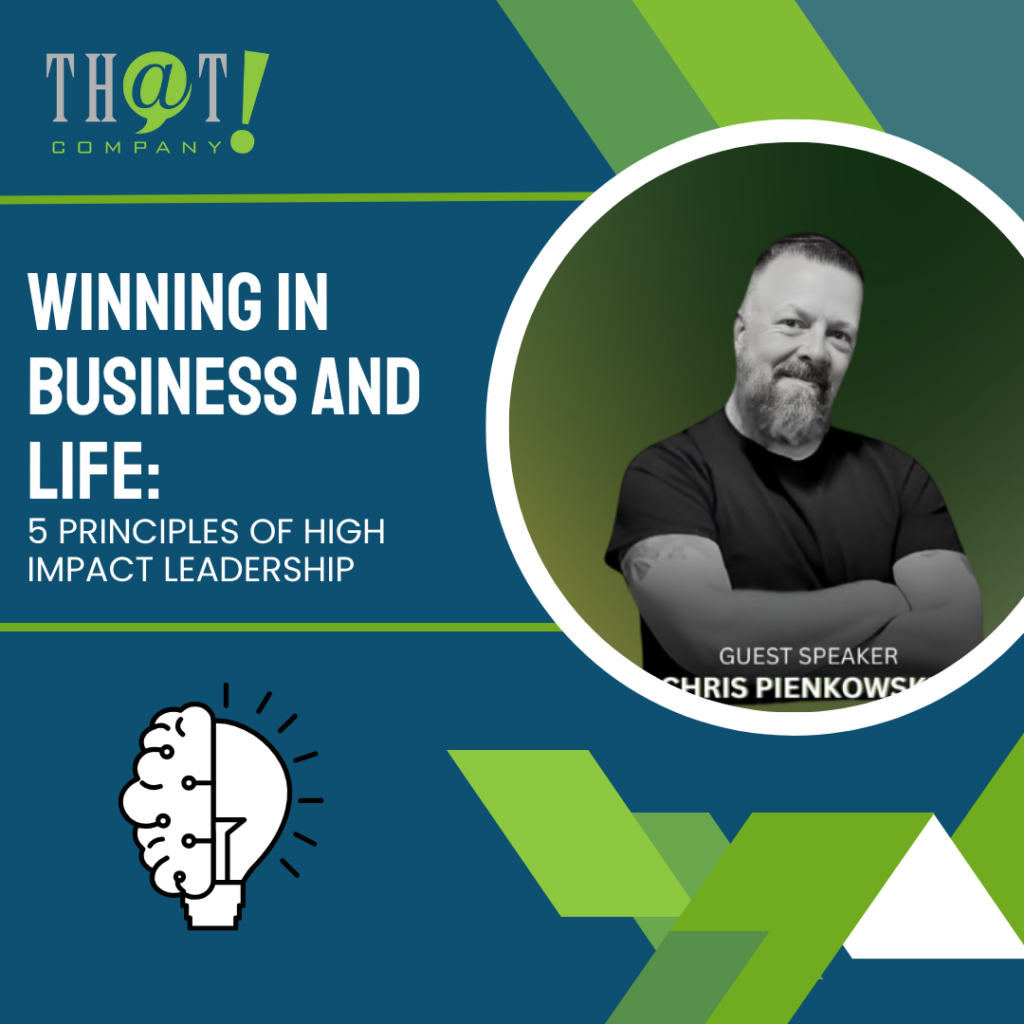
Leadership gets complicated when everything feels important.
You have a team to support, clients to serve, goals to hit, problems to solve, and decisions that cannot always wait for the perfect answer. For agency owners in particular, the temptation is to stay involved in everything. But that can quickly turn leadership into a bottleneck.
In this Agency Owner Mastermind session, leadership and business coach Chris shared a practical framework for high impact leadership built around five principles: communicate for clarity, simplify for effectiveness, prioritize and act, lead with conviction and caring, and decentralize decision-making.
These principles apply to business, but they do not stop at the office door. They can also improve how you communicate, make decisions, build trust, and lead in everyday life.
Prefer to watch? The full conversation is in the video below. Otherwise, here are the biggest lessons agency owners and business leaders can put to work.
What Is High Impact Leadership?
High impact leadership is an approach focused on consistently producing strong results while developing yourself and the people around you.
That distinction matters.
Leadership is not simply having the final say or being the person with the biggest title. High impact leaders challenge the status quo, empower others, pursue continuous improvement, and step forward when there is a leadership void.
They also have a bias toward action.
When something needs to happen, they do not simply point at the problem. They help create clarity around the goal, determine what needs to happen next, and make sure someone has clear ownership.
Chris organized that approach around five interconnected principles:
- Communicate for clarity
- Simplify for effectiveness
- Prioritize and act
- Lead with conviction and caring
- Decentralize decision-making
The real value comes from using them together.
1. Communicate for Clarity
Communication is the foundation of high impact leadership because communication is not complete simply because something was said.
The real question is whether everyone walked away with the same understanding.
Leaders need to communicate information clearly enough for people to act on it. At the same time, they need to ask good questions when receiving information so they understand what others actually mean.
Use the 5W Framework
Chris recommends a simple framework for creating that clarity:
What: What are we doing? Define the objective, initiative, or goal.
Why: Why does it matter? Explain the desired outcome and the benefit to the organization or team.
When: When does it need to happen? Establish deadlines, timelines, and checkpoints.
Where: Where will the work happen, and where can people find the resources or information they need?
Who: Who is ultimately accountable for the outcome?
There is intentionally no “how.”
Once a capable person understands what needs to happen, why it matters, the relevant timeline and resources, and that they own the outcome, the leader should give them room to determine how to accomplish it.
That is where communication begins turning into empowerment.
One Outcome Needs One Accountable Owner
One of the most useful lessons from this framework is deceptively simple: there should be one clear point of accountability.
When two people are both “ultimately responsible,” it becomes very easy for neither person to feel truly responsible.
You end up with:
“I thought they were handling that.”
Followed by:
“I thought you were handling it.”
And suddenly everyone is very clear about whose fault it wasn’t.
Clear ownership prevents that confusion. Collaboration can involve many people, but ultimate accountability should have a name attached to it.
2. Simplify for Effectiveness
Good leaders continually look for the straightest reasonable line between where they are and where they need to go.
That requires occasionally stepping away from the day-to-day details and asking an uncomfortable but valuable question:
Why are we still doing it this way?
Processes accumulate over time. A step that once served a purpose may no longer be necessary, yet teams continue following it because “that’s how we’ve always done it.”
Chris illustrated the point with the story of a family that always cut both ends off a ham before putting it in the oven. Eventually, someone asked why.
The answer went back generations: Grandma’s oven had been too small.
The oven changed. The process didn’t.
Businesses do the same thing.
High impact leaders look for outdated processes, unnecessary steps, duplicated work, and other friction that no longer contributes to the desired result.
Use the 5 Whys to Find Root Causes
Simplification also means solving the actual problem rather than repeatedly treating symptoms.
The 5 Whys technique helps leaders investigate a problem by repeatedly asking why it happened until they reach a root cause.
Imagine a critical system keeps running out of memory.
Adding more memory might temporarily solve the problem. But asking why repeatedly could reveal that the system was configured incorrectly, the engineering team lacked necessary information, and the original setup process never included a reliable method for communicating those requirements.
Now the organization can improve the process instead of waiting for the same problem to return.
That is the difference between putting out fires and reducing the number of fires you have to put out.
3. High Impact Leadership Requires You to Prioritize and Act
Clear communication and simple processes are valuable, but eventually someone has to move.
The third principle of high impact leadership is identifying the most important next steps and acting on them.
That begins with knowing exactly what outcome you are trying to achieve.
When the end goal is vague, priorities tend to be vague too. When the destination is clear, leaders can work backward and determine which actions need to happen first.
Build Milestones Into the Plan
Deadlines should not exist only at the end of a project.
Chris recommends breaking larger goals into smaller periods and measurable checkpoints. A yearly objective might become quarterly priorities, which then become monthly or weekly actions.
Those checkpoints act like rumble strips on the side of a highway.
They tell you when you are drifting before you end up somewhere you never intended to go.
Waiting until the end of a quarter to discover that a project went off track two months earlier is not particularly useful. Regular checkpoints give leaders and teams time to adjust.
Use the OODA Loop
One framework Chris recommends for making those adjustments is the OODA Loop:
Observe: Identify what is happening or what has changed.
Orient: Review the information and understand the situation.
Decide: Determine the appropriate course of action.
Act: Execute that decision.
Then repeat.
Plans are useful, but reality has a habit of editing them.
High impact leaders recognize changes early, reassess the available information, make a decision, and continue moving instead of remaining locked into a plan that no longer reflects reality.
4. Lead With Conviction and Caring
Not every leadership principle is about processes and frameworks.
Leadership is ultimately about people.
Conviction means knowing what you stand for, acting consistently with those values, and expecting the same standard from the people you lead.
Caring means recognizing that those people have individual needs, challenges, and goals.
Effective leadership requires both.
A leader can set high expectations while still noticing when a normally strong performer is struggling and asking, “What’s going on, and how can I help?”
Those two ideas are not contradictory. In healthy organizations, they reinforce each other.
Practice Servant Leadership
Chris emphasized the importance of putting the needs of your people ahead of your own.
That includes recognizing team members for their wins while accepting responsibility when things go wrong.
When someone on your team succeeds, celebrate their accomplishment.
When the team fails, leaders should examine their own role rather than immediately searching for someone else to blame.
That behavior builds something every high-performing team needs: trust.
Trust Is the Foundation of a High-Performing Team
Chris used Patrick Lencioni’s model for team health to illustrate how trust affects organizational performance.
The progression looks like this:
Trust → Healthy Conflict → Commitment → Accountability → Results
Without trust, disagreement becomes threatening.
With trust, two people can challenge each other’s ideas without treating the disagreement as a personal attack.
That creates room for healthy conflict.
People can put their strongest arguments on the table, question assumptions, and disagree about the approach while remaining aligned around the organization’s goal.
Once everyone has been heard and a decision is made, the team can commit to moving forward.
Commitment makes real accountability possible. And accountability supports results.
Trying to jump directly to accountability without building trust underneath it is one reason leadership conversations can become frustrating.
5. Decentralize Decision-Making
One of the hardest transitions for many business owners is moving from doing to leading.
Early in a company’s life, the owner may make nearly every meaningful decision. That can work when the organization is small.
It becomes increasingly difficult as the business grows.
Decentralized decision-making means giving capable people ownership, accountability, and enough authority to make appropriate decisions without repeatedly returning to the leader for permission.
Your job becomes providing strategic guidance rather than controlling every detail.
Establish Limits of Authority
Delegation does not mean abandoning oversight.
Leaders can establish clear boundaries within which someone has decision-making authority.
For example, a team member responsible for a project might have authority to approve expenses within a defined range. If a decision exceeds that range, the leader gets involved.
The employee knows where they can act independently.
The leader knows when escalation is necessary.
Everyone spends less time playing permission ping-pong.
Delegate the Outcome, Not Your Exact Method
Once you delegate responsibility to someone, resist the urge to dictate exactly how they should complete every step.
If a task must be completed exactly as you would do it, you probably have not truly delegated it.
Set the expected outcome. Explain why it matters. Establish boundaries. Make sure the person has the resources and authority necessary to succeed.
Then give them room to work.
They may take a different route than you would.
That is okay.
The objective of delegation is not to create a second version of yourself. It is to develop people who can take ownership and produce the required result.

Replace Backward-Looking Feedback With Feedforward
Giving people autonomy does not eliminate the need for guidance.
When something goes wrong, Chris recommends moving beyond feedback and using what he calls feedforward.
Traditional feedback can become overly focused on what already happened:
“You did this wrong.”
Feedforward acknowledges the problem but immediately shifts the conversation toward improvement:
“Here’s what happened. What should we do differently so it doesn’t happen again?”
That small shift turns correction into development.
A leader’s responsibility is not merely to identify mistakes. It is to help people learn from those mistakes and improve future performance.
What Effective Delegation Looks Like
The five principles come together clearly when leaders delegate.
Effective delegation means:
- Specifying the expected result
- Giving clear direction about the objective
- Explaining why the responsibility is being delegated
- Establishing limits of authority
- Giving the person confidence and room to execute
- Making sure others know who owns the responsibility
- Recognizing the person responsible when the work succeeds
There are also a few habits to avoid.
Do not delegate only the work you consider beneath you. Do not expect another person to perform a task exactly the way you would. Do not continually insert yourself into work after assigning clear ownership. And do not take credit for someone else’s success.
Most importantly, avoid turning delegation into micromanagement with a nicer name.
Trust people enough to give them ownership, then make sure they know where the boundaries are and when to bring you back into the conversation.

Leadership Is Personal, Too
One of the most interesting parts of the Mastermind discussion happened after the formal presentation.
The conversation moved beyond business processes and into the reality that people do not neatly divide themselves into “work” and “life.”
Stress at home can affect work. Business pressure can affect family life. Leadership habits often carry across both.
One participant shared how adding a simple “How are you doing?” check-in to a regular team meeting changed its tone.
Chris suggested another practical approach: begin weekly leadership meetings by asking each person to share two pieces of good news—one personal and one professional.
It sounds simple because it is.
But small human moments can help teams build the relationships and trust that make harder conversations possible later.
Vulnerability Makes Leadership Stronger
Another important point from the discussion was the role of vulnerability.
Leaders have traditionally been expected to know everything.
In practice, acting as if you know everything can prevent you from hearing valuable ideas from people who may be closer to the problem than you are.
Your team members see things you do not.
They have experiences you do not.
Sometimes they will have better ideas than you do.
Creating an environment where people can challenge an idea, ask why, suggest another approach, or point out a problem is not surrendering leadership.
It is using the intelligence of your organization.

The Five Principles Work Together
The five principles of high impact leadership are not meant to operate as a rigid sequence.
They reinforce one another.
Clear communication makes delegation easier. Simplification improves execution. Prioritization creates action. Conviction and caring build trust. Trust makes decentralized decision-making possible.
And delegation creates new opportunities to communicate, coach, recognize success, and develop future leaders.
That interconnectedness is what makes the framework useful.
Leadership is not one big decision.
It is a series of conversations, decisions, habits, and actions that steadily shape how people work together.
Key Takeaways for Agency Owners
For agency owners, these principles become especially valuable as the business grows.
Growth eventually forces a choice: continue personally owning more and more of the operation, or build people, processes, and partnerships capable of carrying responsibility with you.
The biggest lessons from this Mastermind are straightforward:
- Communicate the what, why, when, where, and who—then give capable people room to determine the how.
- Assign one clear owner to an outcome.
- Regularly question processes that exist simply because “we’ve always done it that way.”
- Solve root causes rather than repeatedly treating symptoms.
- Break major goals into measurable milestones and adjust as conditions change.
- Build trust before expecting healthy conflict and accountability.
- Set clear limits of authority so people can make decisions confidently.
- Delegate outcomes instead of micromanaging methods.
- Recognize your team’s wins and take leadership responsibility when things go wrong.
- Remember that leadership is fundamentally about relationships.
Agency owners do not scale by personally becoming responsible for everything.
They scale by building an organization in which the right people have clarity, ownership, trust, and the authority to act.
The same principle applies when deciding which capabilities truly need to remain inside your agency. With the right White Label Digital Marketing partner, agencies can gain support with sales, client communication, fulfillment, and project management under their own brand—giving owners more time to lead, build relationships, generate opportunities, and work on the agency instead of constantly working in it.
High impact leadership ultimately comes down to creating clarity, building trust, developing people, and knowing when to get out of their way.