Skip to content

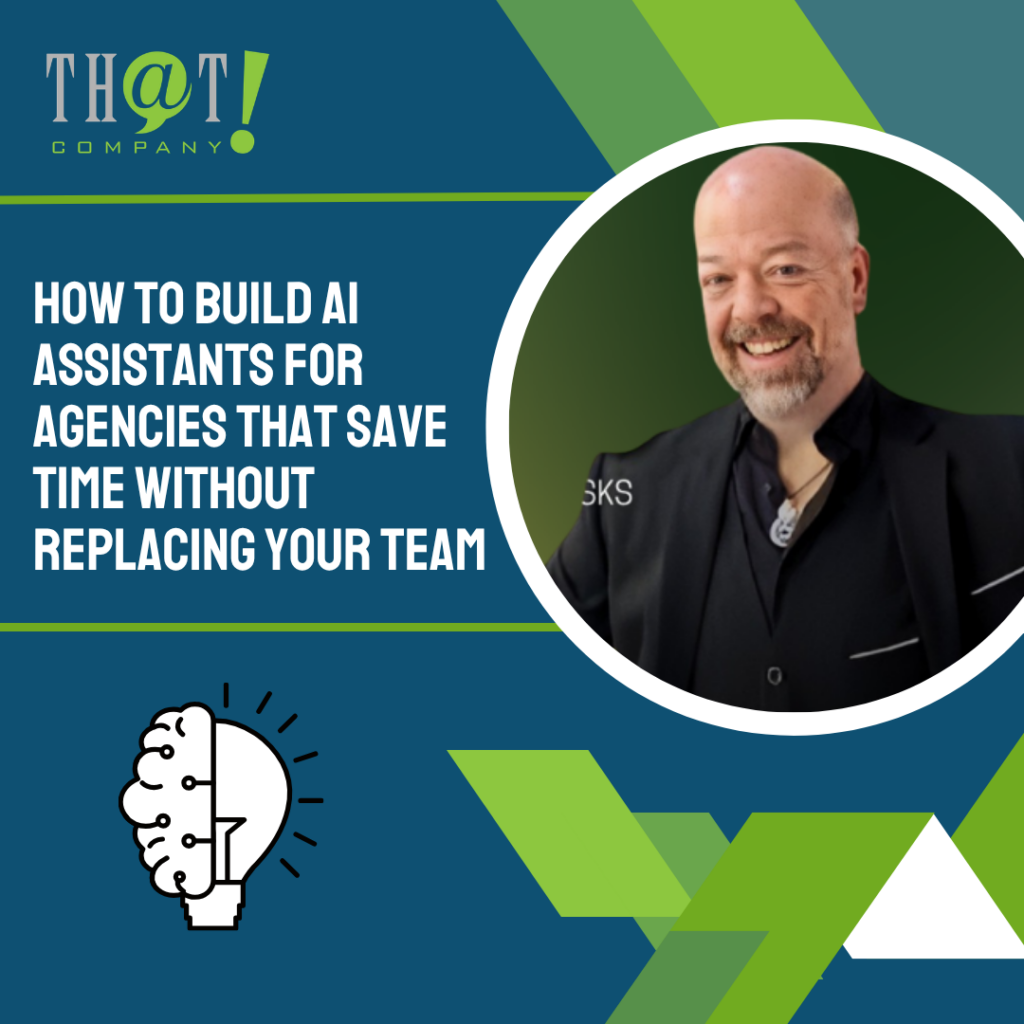
AI is not here to replace your agency team. Used well, it is here to amplify them.
That was one of the central messages from Mike Allton, Chief Storyteller at Agorapulse and founder of The AI Hat, during this mastermind session on building custom AI assistants for marketing and agency workflows. For agency owners already juggling client work, sales conversations, reporting, content, campaigns, and team management, the conversation was timely.
The big opportunity is not simply “using ChatGPT.” It is building AI assistants for agencies that understand your processes, follow your brand standards, and help your team move faster without sacrificing strategy, creativity, or client relationships.
For those who prefer to watch the full session, the video walks through the practical examples, frameworks, and Q&A in more detail.
Why AI Assistants For Agencies Matter Right Now
Agency owners are under constant pressure to do more with the same team.
You need to produce better content, respond faster, analyze more data, support clients more consistently, and still find time to sell, lead, and grow. That is a lot to ask from any team, even a great one.
Mike framed AI assistants as “digital partners” that can be customized to specific roles, responsibilities, and workflows. Instead of relying on a generic AI tool, agencies can create assistants that function more like trained team members.
These assistants can help with tasks such as:
- Turning rough ideas into campaign concepts
- Summarizing meeting notes and creating follow-ups
- Drafting articles, emails, ads, and social posts
- Preparing podcast or webinar outlines
- Researching prospects or competitors
- Analyzing campaign data
- Repurposing long-form content into multiple assets
The value is not just speed. The real value is capacity.
When repeatable tasks take minutes instead of hours, your people have more room for the work that actually moves the business forward: strategy, creativity, sales conversations, client relationships, and leadership.
The Difference Between Generic AI And A Custom AI Assistant
A generic AI tool can be useful, but it does not automatically understand your agency, your clients, your tone, or your expectations.
That is where custom instructions come in.
Mike described custom instructions as the blueprint for your AI assistant. They define the assistant’s role, behavior, expertise, communication style, and output requirements.
Without them, you are essentially starting from scratch every time. With them, you can give the AI a consistent operating framework.
For agencies, this matters because consistency is everything. Your clients expect messaging, reports, campaigns, and recommendations to feel aligned with their brand and goals. If your AI output has to be heavily rewritten every time, it is not really saving you much time.
A properly trained assistant can help your team produce stronger first drafts, stay closer to brand voice, and reduce the amount of repetitive prompting required.
How To Write Better Custom Instructions
One of the most practical takeaways from the session was Mike’s recommendation to use the RACE framework when building custom AI assistants.
RACE stands for:
Role
Tell the assistant exactly what it is.
For example:
“You are an experienced social media strategist for a digital marketing agency.”
Mike also noted that it is better to say “you are” rather than “act like.” That small shift helps focus the assistant more directly on the role you want it to perform.
Instructions
Explain what the assistant should do, step by step.
This is where you define the workflow. Do you want it to ask questions first? Create a draft? Review against a checklist? Suggest improvements? Format the output a certain way?
The clearer the instructions, the better the result.
Context
Give the assistant the background it needs.
For an agency, that might include:
- Client industry
- Target audience
- Brand positioning
- Offer details
- Campaign goals
- Competitive landscape
- Service scope
- Previous examples
Context is what turns a generic response into something useful.
Constraints
Set boundaries.
This can include tone, length, format, words to avoid, claims not to make, compliance requirements, or platform-specific limitations.
For example, an agency might tell an assistant:
“Keep the copy professional, clear, and benefit-focused. Avoid hype, exaggerated promises, and technical jargon unless it is necessary.”
That kind of guardrail protects quality.
Examples
Show the assistant what good looks like.
This is one of the most overlooked steps. If you already have a strong client report, campaign brief, proposal section, or social post, use it as a model. AI performs better when it can see the standard you are aiming for.
Think of it like onboarding a new employee. The more clearly you train the assistant, the more useful it becomes.
Custom Instructions, Memory, And Context Are Not The Same Thing
Mike also made an important distinction between three ways AI handles information:
Chat Context
This is what the AI remembers inside one conversation. If you ask it to draft a post and then say, “Make it shorter,” it understands what “it” refers to because of the current chat.
The limitation is that chat context is temporary. Start a new conversation, and much of that working context may be gone.
Stored Memory
Some platforms can remember broad preferences across chats. This can help with general settings, but it is not the same as building a detailed assistant.
Stored memory might remember that you prefer concise responses. Custom instructions can define a full role, workflow, tone, process, and output structure.
Custom Instructions
Custom instructions are the rules of the road.
They tell the assistant how to behave every time it is used. For agencies, this is where the real leverage begins because you can build assistants around specific repeatable tasks.
AI Assistant Ideas For Agency Teams
One of the strongest parts of the session was the idea of creating an “AI Work Buddy” for different roles inside the organization.
Instead of trying to overhaul the entire agency at once, you can start small. Give each person or department a useful assistant that helps with the work they already do.
Here are several practical examples.
AI Chief Of Staff
This assistant helps agency leaders organize ideas, prepare for meetings, draft communications, and think through strategic initiatives.
It can help with:
- Meeting preparation
- Leadership updates
- Strategic brainstorming
- Internal memos
- Podcast or webinar prep
- Article outlines
- Decision support
For owners who are constantly switching between sales, operations, finance, and client strategy, this type of assistant can quickly become a valuable thinking partner.
AI Content Repurposing Assistant
Agencies create a lot of content, but too often a webinar, blog, podcast, or training session gets used once and then buried.
A content repurposing assistant can turn one asset into many.
For example, it can transform a webinar transcript into:
- A blog post
- LinkedIn posts
- Short-form video scripts
- Email newsletter copy
- Quote graphics
- Sales enablement snippets
- FAQ content
That means your team gets more mileage out of every piece of content without starting from a blank page each time.
AI Campaign Strategist
Campaign planning can be messy. There are goals, audiences, offers, timelines, budgets, deliverables, and channels to coordinate.
An AI campaign strategist can help organize the moving parts.
It can assist with:
- Campaign concepts
- Audience segmentation
- Messaging angles
- Channel recommendations
- Project timelines
- Budget considerations
- Creative briefs
The assistant should not replace strategic judgment, but it can help your team move from scattered ideas to a structured plan much faster.
AI Customer Insights Analyst
Agencies often sit on valuable customer data but do not always have time to turn it into useful insight.
An AI customer insights assistant can help analyze:
- Survey responses
- Reviews
- Social media comments
- Customer feedback
- Sales call notes
- Support themes
- Campaign performance data
One important caution from the session: anonymize customer data before using it with general AI tools. Protecting client and customer information is not optional.
AI Marketing Automation Assistant
AI assistants may not fully run your automation platforms, but they can make automation work easier.
They can help draft email sequences, suggest lead nurturing paths, personalize copy by segment, summarize performance reports, and recommend improvements based on campaign data.
For agencies managing multiple client accounts, this can reduce the time spent building and revising routine automation assets.
AI Copywriting Assistant
A trained copy assistant can help create:
- Ad copy
- Headlines
- Landing page copy
- Website sections
- Social captions
- Email subject lines
- Calls to action
The key is training it on the right voice, audience, offer, and conversion goal. Otherwise, you may get copy that sounds polished but does not sound like the brand.
Pretty words are nice. Converting words are better.
Should Agencies Build Their Own AI Tools Or Use Existing Platforms?
During the Q&A, one agency owner asked a smart question: should agencies build these AI tools themselves, or wait for platforms like HighLevel, HubSpot, Salesforce, and others to build AI directly into their products?
Mike’s answer was practical: use the tools available now, but do not rush into building custom software unless that is truly part of your service model.
That is a grounded approach for most agencies.
If you already use Google Workspace, ChatGPT, Claude, Gemini, HighLevel, HubSpot, Salesforce, Zapier, Make, or similar platforms, start there. Many of these tools already have AI capabilities or integrations that can support real workflows.
The goal is not to become a software company overnight. The goal is to make your current agency operations more efficient, more consistent, and more scalable.
For most agencies, the first step is not coding an AI system. It is documenting a repeatable workflow and building an assistant to support it.
The Human-AI Partnership: Augment, Do Not Replace
A major theme throughout the session was that AI should be used to augment human talent, not erase it.
That distinction matters.
AI can summarize, draft, sort, analyze, suggest, and accelerate. But your team still brings the judgment, empathy, ethics, creativity, and relationship-building that clients value most.
The most successful agencies will not be the ones that automate everything just because they can. They will be the ones that thoughtfully decide which tasks AI should handle and which moments need a human touch.
That is especially important in client services.
Clients do not just buy deliverables. They buy trust. They want to know someone understands their business, cares about the outcome, and can guide them through decisions. AI can support that relationship, but it should not become a wall between the agency and the client.

A Simple Starting Plan For Agency Owners
If you are interested in building AI assistants for your agency, start with one workflow.
Choose something repetitive, time-consuming, and important enough to improve.
Good starting points include:
- Weekly client reporting summaries
- Blog-to-social content repurposing
- Sales call follow-up emails
- Campaign brief creation
- Client onboarding questionnaires
- Meeting note summaries
- Local SEO content drafts
- Paid ad variation generation
Once you choose the workflow, document:
- Who uses it
- What input the assistant needs
- What output it should create
- What tone and format it should follow
- What quality checks are required
- When a human must review or approve the work
Then build the assistant with clear instructions, test it, improve it, and only then roll it out more broadly.
Small wins create confidence. Confidence creates adoption. Adoption creates scale.
Key Takeaways From The Session
AI assistants can help agencies save time, improve consistency, and give team members more room to focus on higher-value work.
The most important lesson is not that agencies should use AI everywhere. It is that agencies should use AI intentionally.
The strongest opportunities come from:
- Building assistants around real agency workflows
- Using custom instructions instead of one-off prompts
- Training AI on brand voice, process, and examples
- Protecting client data and keeping humans in the loop
- Starting with practical use cases before chasing advanced automation
- Viewing AI as a partner, not a replacement
For agency owners, this is a chance to work on the business instead of constantly being buried in the business. And that is exactly where the right partner can make a difference.
If your agency is looking for more capacity without adding unnecessary complexity, our White Label Digital Marketing team can help you scale fulfillment, support sales conversations, and represent your agency with the professionalism your clients expect.