Skip to content

Cold email has earned a mixed reputation. Some agency owners swear by it. Others tried it once, got buried in spam folders, and decided it was a waste of time.
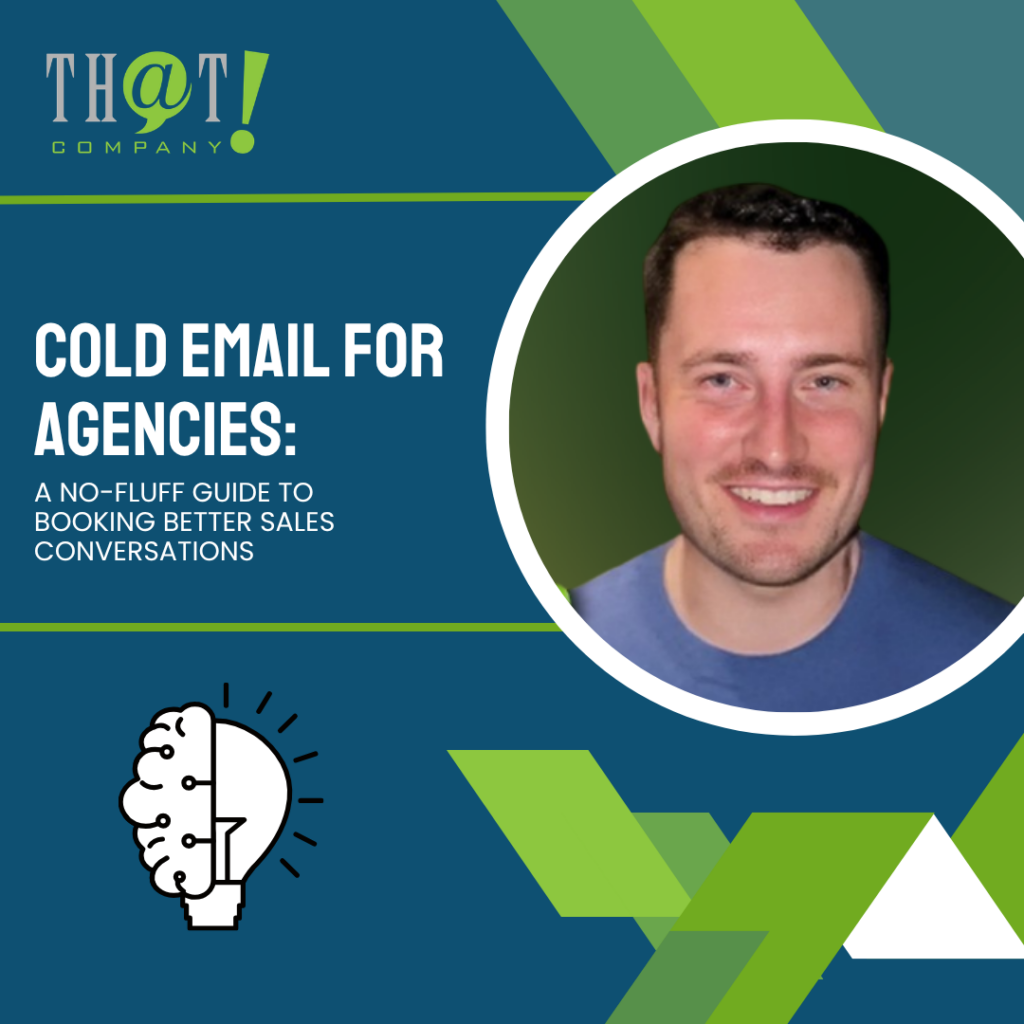
In this Mastermind Speaker Series session, Christian, co-founder at ListKit, breaks down why cold email still works when it is built on the right offer, the right message, and the right infrastructure. For agency owners looking for a predictable way to start more sales conversations, this session is a practical reminder that cold email does not need to be complicated. It just needs to be done with care.
For those who prefer to watch the full conversation, the video covers the entire session.
Why Cold Email For Agencies Still Deserves A Place In Your Growth Strategy
Agency growth often depends on a few familiar channels: referrals, content, paid ads, networking, and outbound sales.
Each has a role. Referrals are great, but they are hard to predict. Content can build authority, but it takes consistency and time. Paid ads can scale, but they can also get expensive fast. Cold email sits in a useful middle ground.
As Christian explained, cold email can be “the perfect mix of cheap and predictable” when the system is built correctly.
That does not mean sending hundreds of generic emails and hoping something lands. That is not strategy. That is inbox littering.
Effective cold email for agencies comes down to three fundamentals:
- A clear offer that speaks to a real business outcome
- A short message that creates curiosity or offers value
- A properly configured sending process that protects deliverability
When those pieces work together, cold email becomes less about blasting prospects and more about opening relevant conversations with the right people.

The Three Cold Email Myths That Hold Agencies Back
Christian opened the session by addressing three common beliefs that stop business owners from using cold email effectively.
Myth 1: Nobody Reads Cold Emails
People do read cold emails when the message is relevant, specific, and easy to respond to.
The problem is not usually the channel. It is the copy.
Long, generic pitches usually fail because they ask too much from the reader too soon. A busy business owner does not want to read five paragraphs about your agency, your process, your awards, and your favorite project management tool. They want to know one thing: “Is this relevant to me?”
That is why Christian recommends keeping cold emails short. In many cases, under 30 words can perform better than a polished, over-explained sales letter.
Myth 2: Cold Emails Always Go To Spam
Cold emails can go to spam when the technical setup is weak, the sending volume is too aggressive, or the message gets marked as unwanted.
But Christian was clear: spam is not inevitable.
Deliverability depends on proper domain setup, inbox configuration, warming, low sending volume per inbox, and plain-text emails. It also depends on writing messages that people do not immediately mark as spam.
In other words, the best deliverability strategy is both technical and human.
Myth 3: It Is Too Hard To Find Dream Clients
Many agency owners assume they need to manually scrape Google, LinkedIn, directories, or old spreadsheets to build prospect lists.
Christian demonstrated how a defined ideal client profile can turn list building into a focused process. Instead of asking, “Who can we sell to?” agencies should ask:
- What industry do we serve best?
- Which job titles make the buying decision?
- What company size fits our service?
- What pain points or goals do these prospects already have?
- What keywords, technologies, or locations help identify them?
The tighter the profile, the better the messaging.
Start With The Offer Before You Write The Email
One of the strongest points in the session was this: “I sell SEO” is not an offer.
Neither is “I do email marketing,” “I build websites,” or “I run ads.”
Those are services. Cold email needs an outcome.
For example, instead of saying:
“We provide SEO services for local businesses.”
A stronger offer might sound like:
“We help roofing companies generate more qualified local search leads from Google.”
That is more specific. It tells the prospect who it is for, what it helps with, and why they should care.
Christian broke offers into three levels.
Level 3 Offers: Prospects Think They Do Not Need It
This includes services like web design, SEO, and some paid media offers. The prospect may believe they already have it handled.
For these offers, agencies often need to lead with a free resource, audit, video, or sample to show the prospect what they are missing.
Level 2 Offers: Prospects Know They Need It, But Not Why They Need Yours
This includes services like email marketing, CRO, social media management, creative production, and similar competitive categories.
Here, guarantees, risk reversal, proof, and personalized video can help separate your offer from everyone else in the inbox.
Level 1 Offers: Prospects Already Want The Outcome
These are often newer, more specialized, or less crowded services. The prospect already understands the need, and competition is lighter.
In some cases, a direct call pitch may work. But even here, value-first messaging can improve response quality.
Cold Email For Agencies Works Best When It Feels Personal, Not Polished
A standout lesson from the session was Christian’s preference for simple, direct messages.
He shared the idea behind very short cold emails that ask a clear question or offer a small next step. The point is not to close the deal in the first email. The point is to earn the next interaction.
That is an important mindset shift.
A cold email should not try to explain your entire service model. It should create enough interest for the prospect to say, “Sure, send it over,” or “I’m open to taking a look.”

Three Cold Email Angles Agencies Can Use
Christian outlined three cold email strategies that are especially useful for service-based businesses and agencies.
1. The Trojan Horse Loom Video Pitch
This approach starts with an observation that lowers resistance and creates curiosity.
Example:
“I was checking out your website and noticed a few things that may be hurting conversions. I recorded a quick video breaking down what I found. Mind if I send it over?”
This works because it does not immediately ask for a meeting. It offers insight.
For agencies selling SEO, CRO, web design, paid ads, or social media, this can be powerful because there is something visible to review. The prospect’s website, ads, Google visibility, social presence, or landing pages can all provide a reason to reach out.
2. The Standard Video Pitch
When you cannot observe the issue directly, a standard video pitch can still work.
Example:
“We can help you book more qualified sales conversations through a cold email campaign. I had a quick idea for how this could work for your agency. Mind if I send over a short video?”
This still keeps the ask small. Instead of pushing for a call, it offers a useful next step.
3. The Lead Magnet Pitch
This approach offers a practical resource, sample, or asset.
Example:
“I put together a sample cold email script your team could use to reach local roofing companies. Mind if I send it over?”
For agencies, this could be:
- A sample homepage mockup
- A local SEO audit
- A short ad teardown
- A content idea list
- A landing page review
- A sample email sequence
- A competitor visibility snapshot
The key is to make the resource specific enough that the prospect sees immediate value.
The Best Cold Emails Are Built Like A Puzzle
Christian explained that cold email copy has a few movable pieces:
- The hook
- The offer
- The call to action
- The format of the value being offered
Once those pieces exist, agencies can test different combinations.
For example, the same offer can be paired with a video CTA, an audit CTA, or a call CTA. The same CTA can be paired with a curiosity hook or a direct outcome hook.
This matters because small changes in copy can create very different results.
Christian showed one example where two campaigns targeted the same audience with the same volume, but one message generated dramatically more positive replies than the other. The difference was not the list. It was the angle.
The stronger message was shorter, more specific, included recognizable brand names, offered a guarantee, and asked if the prospect wanted to see a video. The weaker message was longer, vaguer, and used a soft “worth a quick chat?” call to action.
That is a useful reminder for agencies: cold email is not just about sending volume. It is about message-market fit.
Deliverability: How To Stay Out Of The Spam Folder
This is the part most agency owners would rather avoid. Fair enough. DNS records are not exactly beach reading.
But deliverability matters. A great offer does not help if nobody sees it.
Christian recommended a few practical rules:
- Do not send high volume from one main business domain
- Use separate sending domains or domain variations
- Keep daily sends low per inbox
- Warm inboxes before launching campaigns
- Configure DKIM, DMARC, DNS, and related technical settings correctly
- Avoid links, images, heavy HTML, and spam-triggering language
- Use plain text emails
- Write messages that people are unlikely to report as spam
One especially important point for agencies: do not risk your main business domain.
Your primary domain is tied to your brand, client communication, proposals, reporting, and reputation. Cold outreach should be built on separate infrastructure so your core business communication stays protected.
What Metrics Should Agencies Watch?
Christian noted that open rates are less useful than they used to be because tracking them can require code or pixels that may hurt deliverability.
Instead, he focuses on replies, positive replies, calls booked, and deals closed.
A campaign may look underwhelming if you only view it as “one call from 500 emails.” But the math changes when you evaluate cost per opportunity.
If reaching 500 people costs a relatively small amount and produces a qualified sales conversation, that can be a strong acquisition channel. Especially for agencies with high client lifetime value.
The bigger question is not, “Did every email get a reply?”
The better question is:
“Can this campaign create qualified conversations at a customer acquisition cost that makes sense?”
That is the business owner’s lens. It is also the one that keeps teams from obsessing over vanity metrics.

Better Lists Create Better Conversations
Cold email performance starts before the first message is written.
It starts with the list.
Christian pushed agencies to define one clear ideal client profile instead of trying to sell to everyone. This is especially important for marketing agencies, because broad targeting creates vague messaging.
Compare these two approaches:
“We help small businesses with SEO.”
Versus:
“We help Florida roofing companies generate more storm repair leads from Google.”
The second version gives you sharper copy, better personalization, and a stronger reason for the prospect to care.
For agencies, strong list criteria might include:
- Industry
- Location
- Job title
- Company size
- Revenue range
- Technology used
- Hiring signals
- Search visibility
- Ad activity
- Recent funding or expansion
- Niche-specific pain points
Specificity may reduce the size of the list, but it increases the quality of the conversation.
Cold Email Is Not A Replacement For Sales
One of the most grounded takeaways from the session was that cold email gets you to the conversation. It does not replace the rest of the sales process.
A positive reply is not a closed deal.
Agencies still need to:
- Respond quickly
- Qualify the opportunity
- Book the meeting
- Diagnose the prospect’s real problem
- Present a clear solution
- Follow up consistently
- Close with confidence
Cold email can create pipeline, but the agency still needs to manage that pipeline well.
This is where many agencies hit a growth ceiling. They generate interest, but the follow-up process is slow, inconsistent, or too dependent on the owner.
And when fulfillment is already stretched, adding more leads can feel like adding more pressure.
That is one reason many agencies choose to partner with a white-label team. With the right support behind the scenes, agency owners can spend less time stuck in delivery and more time building relationships, closing deals, and working on the business.
How Agencies Can Apply This Right Away
Cold email does not need to start with a massive campaign.
A practical starting point might look like this:
- Choose one niche or ideal client profile.
- Write one specific outcome-based offer.
- Create one short cold email using a video, audit, or lead magnet CTA.
- Build a focused list of decision makers.
- Send at a safe, controlled volume.
- Track positive replies, booked calls, and closed deals.
- Test one variable at a time.
The goal is not perfection. The goal is learning what message gets the right prospects to raise their hand.
Key Takeaways From The Session
Cold email still works, but only when it respects the person receiving it.
The strongest campaigns are short, specific, relevant, and supported by the right technical setup. Agencies that treat cold email like a value-first conversation starter will have a much better chance of getting meaningful replies than those sending generic sales blasts.
The biggest lessons from Christian’s session were:
- Cold email can be affordable and predictable when built correctly.
- Your offer must sell an outcome, not just a service.
- Short emails often outperform long, over-polished pitches.
- Video pitches and lead magnets can reduce resistance.
- Deliverability depends on both technical setup and message quality.
- A narrow ideal client profile leads to stronger copy.
- The most important metric is not open rate. It is qualified conversations and closed revenue.
For agency owners, the bigger opportunity is not just getting more leads. It is building a system where growth does not depend on referrals, luck, or the owner doing everything alone.
If your agency is generating opportunities but needs a stronger fulfillment partner behind the scenes, our White Label Digital Marketing services can help you scale client work under your brand while giving you more room to focus on growth.