Skip to content

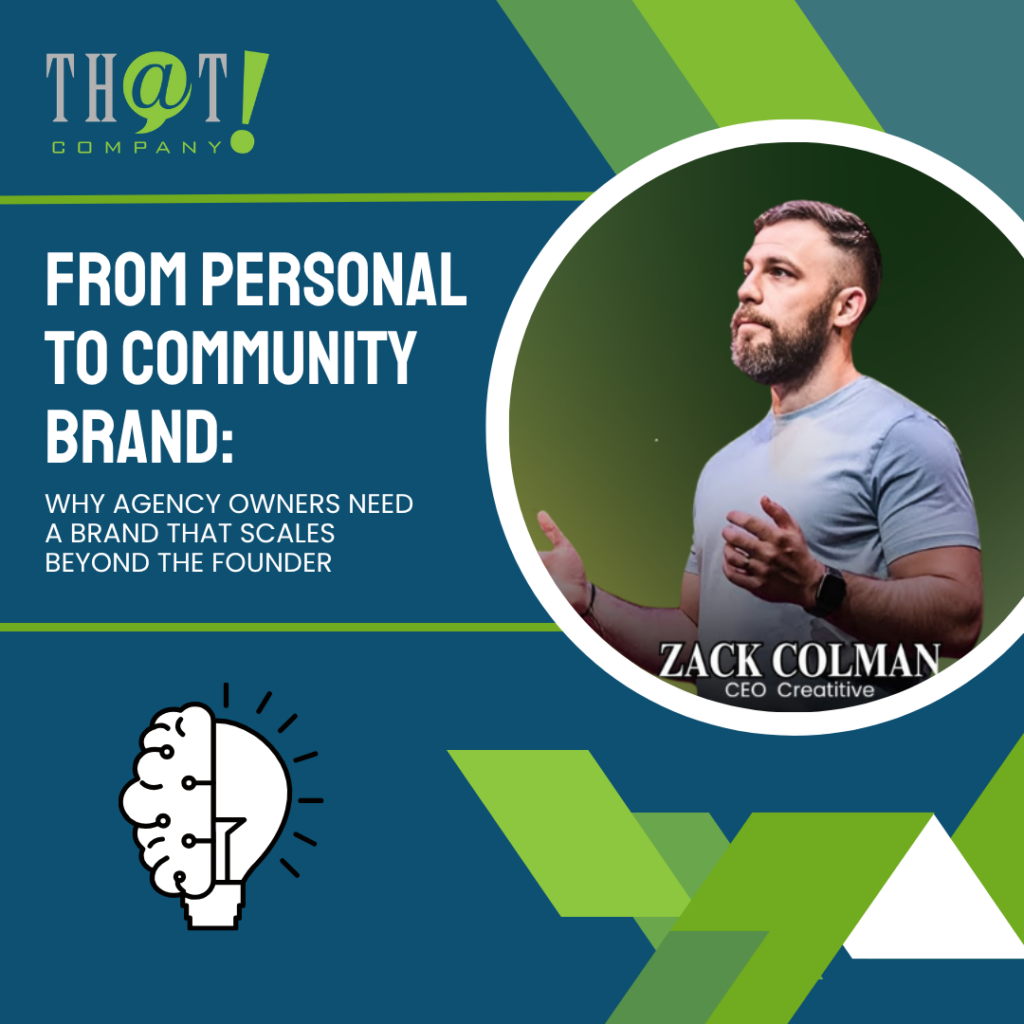
Every agency owner starts with a personal brand, whether they realize it or not. In the beginning, the founder’s reputation, relationships, work ethic, and values often are the brand. But as the agency grows, that “me” brand has to become something bigger: a “we” brand that guides the team, and eventually an “us” brand that clients and community members want to be part of.
In this Mastermind Speaker Series session, Zach Colman shared how agency owners can move from personal identity to community brand strategy by uncovering their values, building a clearer brand voice, and creating a culture that clients can actually feel.
Why Community Brand Strategy Starts With The Founder
Zach’s message begins with a simple but challenging idea: if you do not know what drives you, it becomes much harder to lead others.
Many agency owners chase growth numbers, revenue milestones, and client results. Those things matter. But when the founder’s identity becomes disconnected from the agency’s direction, burnout can follow. Zach shared that during his own “valley of death” period, he was pursuing validation, switching directions, and trying to find motivation in metrics alone.
That lack of connection affected more than his business. It affected his team, friends, family, clients, and confidence.
The lesson for agency owners is clear: your brand cannot scale in a healthy way if it is only built around output. It also needs values, voice, and a sense of purpose that can be shared by the people around you.
Moving From “Me” To “We” To “Us”
One of the strongest frameworks from Zach’s session was the progression from me to we to us.
The “Me” Brand
The “me” stage is where most founder-led agencies begin. The founder’s story, relationships, and personal reputation create momentum.
This stage can be powerful, but it has limits. If every client relationship, sales call, hiring decision, and brand message depends on the founder, the agency becomes hard to scale.
The “We” Brand
The “we” stage happens when the founder’s values become shared by the team.
This is where brand voice becomes operational. It is no longer just what the founder says on a sales call. It becomes how the team communicates, how meetings are run, how mistakes are handled, and how clients are supported.
Zach explained that going from “me” to “we” means taking powerful personal memories and translating them into values others can align with. That alignment helps the team move toward the same company vision.
The “Us” Brand
The “us” stage is where the brand expands beyond the company and starts to resonate with clients, partners, and the broader community.
This is where brand becomes more than positioning. It becomes belonging.
Clients do not just buy because of the offer. They stay, refer, advocate, and grow with you because they feel connected to the way your agency operates.
Zach Colman’s Three C’s Of Branding
Zach built his approach around three pillars: connection, contribution, and confidence.
These are not just abstract branding words. In his story, they became values, a roadmap, and a practical way to make decisions.
Connection: Uncover The Why Behind The Work
Connection starts with understanding your purpose.
For agency owners, this matters because the pressure to grow can easily pull you away from why you started in the first place. It is easy to focus on revenue targets, client acquisition, and delivery systems while losing sight of the deeper motivation behind the work.
Connection asks questions like:
- What do I want people to feel when they interact with this agency?
- What personal experiences shaped the way I lead?
- What values do I want my team to carry into every client relationship?
- What kind of clients do we actually want to serve?
This is not soft work. It is strategic work. A connected founder makes clearer decisions, hires better-fit team members, and communicates with more consistency.
Contribution: Turn Your Why Into Your Who
Zach described contribution as taking your why and shaping it into your who.
For agency owners, this shifts the focus from “How do I close this client?” to “How do I genuinely help this person or business?”
That mindset changes the tone of a sales call. Instead of pushing for the deal, the agency owner listens better, diagnoses better, and builds trust faster.
And yes, the sale often becomes more natural.
Contribution also helps define your ideal audience. When you know what you are best equipped to contribute, you can stop trying to serve everyone. That makes your messaging sharper and your client relationships stronger.
Confidence: Express Your Purpose To Your Community
Confidence is where the work becomes visible.
It shows up in your messaging, your sales process, your leadership style, your content, your hiring, and your client communication. Zach emphasized that confidence is not ego. In fact, he made the opposite point: ego prevents learning, while confidence allows people to grow.
That distinction matters for agencies.
A confident agency can say:
- “Here is what we do well.”
- “Here is where we can help.”
- “Here is what is realistic.”
- “Here is what we do not recommend.”
That kind of clarity builds trust. It also protects the agency from overpromising, underdelivering, or chasing poor-fit clients just to win revenue.
Brand Voice Is More Than A Marketing Exercise
During the session, Zach led attendees through a brand voice exercise. He asked them to think about a joyful memory and pay attention to what they felt, heard, smelled, or experienced.
Why?
Because emotion often reveals values. Those values can then become the foundation for a more authentic brand voice.
Your brand voice is not just the words on your website. It is the narrator of your business. It shapes how your agency sounds in a proposal, how your team responds to a client issue, how your ads feel, and how prospects decide whether they trust you.
A strong agency brand voice should be:
- Consistent
- Recognizable
- Rooted in real values
- Clear enough for the team to use
- Meaningful enough for clients to feel
As Zach put it, the goal is to create a brand that not only looks good, but also makes people feel good.

Living Your Values Beats Listing Your Values
One of the most practical moments in the discussion came during the Q&A.
A participant asked how to balance living your values versus overburdening clients by constantly talking about them. Zach’s answer was direct: if you are living your values, they will show.
That is an important reminder for agencies.
Many companies have a values page. Fewer companies have values that show up in their operations.
Values become real when they influence:
- Interview questions
- Hiring decisions
- Client communication standards
- Sales follow-up emails
- Team meeting agendas
- How mistakes are handled
- How expectations are set
- How transparency is practiced
This is where brand becomes culture. And culture is much harder for competitors to copy than a logo, tagline, or website layout.
Why Community Matters For Agency Growth
Zach made a strong point that profit often sits underneath community.
That does not mean profit is unimportant. Agencies need revenue, margins, and systems to survive. But lasting growth often comes from the community you build around your agency: team members who believe in the mission, clients who trust your process, and partners who advocate for you.
For agency owners, this is especially important because growth can become isolating. The bigger the business gets, the easier it is to drift into disconnected decision-making.
Community pulls the agency back toward alignment.
It helps you build:
- Better client retention
- Stronger referrals
- More aligned hires
- Clearer messaging
- More resilient leadership
- A brand people want to belong to
What Agency Owners Can Take From This Session
The biggest takeaway from Zach’s session is that brand growth starts internally before it scales externally.
Before your agency can become a community brand, you need to understand the values that guide the founder. Then those values need to become shared by the team. From there, clients and partners can experience the brand in a consistent, meaningful way.
That is the path from personal brand to community brand strategy.
It is not about manufacturing a personality. It is about uncovering what is already true, giving it language, and building systems that help others carry it forward.
Key Takeaways
Zach’s session gave agency owners a practical way to think about brand as more than visuals or messaging.
The biggest lessons were:
- A founder-led brand must eventually grow beyond the founder.
- Personal memories and experiences can reveal values that shape the brand.
- Connection, contribution, and confidence create a useful framework for brand growth.
- Brand voice should guide how the agency communicates internally and externally.
- Values only matter when they are lived through operations, hiring, sales, and client service.
- Community creates stronger alignment between the founder, team, clients, and audience.
At That! Company, we see this same principle play out in white-label partnerships. Agencies grow stronger when they have the right support behind the scenes, especially when that support helps them close deals, serve clients under their own brand, and spend more time working on the agency instead of in it. Learn more about how we support agency growth through White Label Digital Marketing.