Skip to content



Digital marketing lingo can be confusing, but it’s crucial for success in the industry. This article simplifies the most important terms, so you can communicate effectively and enhance your strategies.
Key Takeaways
- Understanding digital marketing terminology is crucial for effective communication, strategy development, and resource management in an evolving landscape.
- Utilizing white label services from companies like That! Company enables agencies to expand their offerings, reduce costs, and enhance client retention.
- Familiarity with key concepts such as A/B testing, SEO, and PPC is essential for optimizing digital marketing campaigns and achieving measurable success.

The Importance of Understanding Digital Marketing Terminology
Mastering digital marketing lingo enhances communication among professionals, linking strategies, campaigns, and results. Without a firm grasp of these terms, miscommunication can lead to ineffective strategies and wasted resources. Think of it as trying to build a house without understanding the tools and materials needed—chaos and inefficiency ensue.
Moreover, the digital marketing landscape is continuously changing. Keeping up with the latest terms allows marketers to quickly adapt to new trends and technologies, maintaining the effectiveness of their strategies. Familiarity with these terms not only helps navigate the industry but also facilitates better decision-making and strategy development.
Misunderstanding or not knowing these terms can be a significant setback, leading to missed opportunities and suboptimal marketing campaigns.

Key Benefits of Using That! Company’s White Label Internet Marketing Services
In the fast-paced arena of digital marketing, utilizing That! Company’s white label internet marketing services can be a transformative move. These services empower agencies to broaden their service offerings without the need for additional in-house staff or extensive training, covering crucial areas like SEO, PPC, and social media marketing. By understanding digital marketing lingo, agencies can better communicate these services to clients, enhancing trust and credibility. This approach not only expands the range of services provided but also strengthens client retention by offering a comprehensive solution for all digital marketing needs.
Partnering with a white label marketing agency like That! Company enables agencies to tap into a reservoir of expert knowledge and resources, ensuring top-notch service delivery. This collaboration fosters new revenue opportunities while keeping overhead costs low, allowing agencies to focus on their core competencies and improve the overall quality of their offerings.
Utilizing white label services helps agencies reduce overhead costs and enhance client satisfaction, fostering long-term success.

Essential Digital Marketing Terms and Their Definitions
A solid understanding of key terms is crucial in the digital marketing landscape. Below are essential terms with clear definitions and their importance in creating successful marketing strategies.
From A/B testing to SEO and PPC, understanding these terms will help you optimize your digital marketing campaigns effectively.
A/B Testing
A/B testing is a fundamental concept in digital marketing, used to compare two versions of a web page or marketing asset to determine which one performs better. Marketers split the audience into two groups and expose them to different versions to analyze which variation drives more conversions or engagements.
This technique is pivotal in refining marketing strategies and ensuring the best possible outcomes through data-driven decisions.
SEO (Search Engine Optimization)
Search Engine Optimization (SEO) is the practice of enhancing a website’s visibility on search engine results pages (SERPs) through keyword optimization and content improvements. By strategically incorporating relevant keywords, creating high-quality content, and optimizing web pages, SEO aims to drive organic traffic and improve search rankings. A strong SEO strategy is crucial for attracting website visitors and achieving long-term online success through search engine marketing. Partnering with a white label SEO agency can help businesses implement effective SEO strategies without the need for in-house expertise.
Keywords play a pivotal role in SEO, guiding search engines to understand the content and relevance of web pages. Additionally, tools like XML sitemaps help search engine crawlers identify and index the pages of a website, further enhancing visibility. Mastering SEO allows digital marketers to significantly boost website performance and reach a broader audience.
PPC (Pay-Per-Click)
Pay-Per-Click (PPC) advertising is a performance-based model where businesses pay for each click on their ads, driving traffic to their websites and building brand awareness. This model allows businesses to control their paid advertising costs effectively, as they only incur expenses when users interact with their ads. Factors such as Quality Score, which is influenced by keyword relevance and expected click-through rate, play a crucial role in the success of PPC campaigns.
PPC encompasses various types of ads, including search ads that appear on search engine results pages and display ads shown on websites within ad networks. This advertising model offers flexibility and immediate visibility, making it a valuable component of digital marketing strategies, including google ads.
Effectively understanding and implementing PPC enables marketers to achieve targeted traffic and measurable results.

Advanced Digital Marketing Concepts
As digital marketing evolves, mastering advanced concepts becomes increasingly important. This section explores sophisticated digital marketing strategy and tools that can significantly enhance marketing effectiveness.
Advanced concepts like Conversion Rate Optimization (CRO), Customer Relationship Management (CRM), and retargeting offer deeper insights and refined techniques for achieving marketing goals.
Conversion Rate Optimization (CRO)
Conversion Rate Optimization (CRO) aims to increase the proportion of website visitors who complete the desired actions, such as making a purchase or filling out a form. Techniques like A/B testing and landing page optimization are employed to improve user engagement and reduce bounce rates.
Continuous refinement of these elements enhances user experience and drives higher conversions.
Customer Relationship Management (CRM)
Customer Relationship Management (CRM) is a strategy for managing a company’s interactions with current and potential customers throughout the customer lifecycle. This lifecycle includes stages such as reach, acquisition, conversion, retention, and loyalty. CRM systems help businesses analyze customer interactions, streamline processes, and improve customer relationships.
Effective management of customer data and interactions through CRM systems enhances customer satisfaction and loyalty. This approach not only improves customer retention but also increases the overall lifetime value of customers, making CRM an indispensable tool in digital marketing strategies.
Retargeting
A marketing technique that targets users who have previously interacted with a brand but did not convert is known as retargeting. Retargeting displays tailored ads based on past behavior to bring users back to the website and encourage them to complete the desired action.
This method significantly improves conversion rates by keeping the brand top-of-mind for potential customers.

Social Media Marketing Lingo
Social media marketing has its own set of terms and metrics that are crucial for measuring success. Grasping digital marketing lingo is crucial for crafting effective social media campaigns and engaging with the audience.
This section will explore important terms like engagement rate, influencer marketing, and hashtags, providing insights into their roles and significance in social media marketing.
Engagement Rate
Engagement rate measures the level of interaction that content receives from the audience, such as likes, comments, and shares. This metric is essential for assessing the effectiveness of social media posts and campaigns, as it indicates how well the content resonates with the audience. A high engagement rate often correlates with increased brand visibility and loyalty.
Influencer Marketing
Influencer marketing takes advantage of the reach and credibility of social media personalities to promote products or services Partnering with influencers allows brands to tap into their follower base, enhancing visibility and trust.
This strategy is especially effective in building brand awareness and driving engagement in target audiences.
Hashtags
Hashtags are used to categorize content on social media platforms, making it easier for users to find posts related to specific topics. Using relevant hashtags increases the discoverability of content, engages broader audiences, and enables participation in trending conversations.

Key Performance Indicators (KPIs) in Digital Marketing
Key Performance Indicators (KPIs) are metrics that help measure the success of digital marketing campaigns. KPIs offer valuable insights into various marketing performance aspects, guiding strategy adjustments and decision-making.
This section will delve into important KPIs such as Click Through Rate (CTR), Cost Per Acquisition (CPA), and Return on Ad Spend (ROAS).
Click Through Rate (CTR)
Click-Through Rate (CTR) is a metric used to measure the ratio of clicks to impressions for an ad or link. It indicates how effectively the content is engaging the audience and driving them to take action. A higher CTR generally signifies more compelling and relevant content or ads.
Cost Per Acquisition (CPA)
Cost Per Acquisition (CPA) measures the total cost incurred to acquire a new customer. This metric helps marketers understand the efficiency of their marketing efforts and allocate budgets more effectively.
Lower CPA indicates more cost-effective campaigns.
Return on Ad Spend (ROAS)
Return on Ad Spend (ROAS) evaluates the revenue generated for every dollar spent on advertising. High ROAS indicates a profitable campaign, guiding future budget allocations and strategy refinements.
Understanding ROAS helps in making informed decisions to maximize returns on advertising investments.

Content Marketing Jargon
Content marketing involves creating and distributing valuable content to attract and engage a defined audience. This section will explore essential digital marketing lingo in content marketing, such as content strategy, evergreen content, and user-generated content (UGC), highlighting their roles in driving successful marketing campaigns.
Content Strategy
A content strategy outlines a comprehensive plan for managing and distributing all forms of content within an organization. It includes the planning, creation, and governance of content, ensuring that it aligns with business objectives and audience needs. A well-defined content strategy helps in creating content that is not only engaging but also drives business goals.
Aligning content creation with specific marketing objectives ensures that content efforts are purposeful and effective. This strategic approach is essential for maintaining a consistent brand voice and meeting the needs of the target audience.
Evergreen Content
Evergreen content is crafted to stay relevant and valuable over time, continually drawing traffic long after its release This type of content addresses topics that do not become outdated, providing ongoing value to the audience.
Investing in evergreen content ensures a steady flow of website visitors and sustained engagement.
User-Generated Content (UGC)
User-generated content (UGC) is created by consumers rather than brands, enhancing authenticity and trust in marketing efforts. This content includes reviews, testimonials, and social media posts from customers, which can significantly boost brand credibility.
Leveraging UGC in marketing strategies fosters community engagement and builds stronger customer relationships.

Common Misunderstood Digital Marketing Terms
Misunderstandings in digital marketing lingo can lead to confusion and ineffective strategies. This section will clarify some commonly misunderstood terms, helping marketers utilize them accurately and effectively.
Addressing these misconceptions enhances the clarity and effectiveness of digital marketing communications.
Bounce Rate
Bounce rate refers to the percentage of visitors who leave a website after viewing only one page. A high bounce rate can indicate that the landing page did not meet the visitor’s expectations or that the content was not engaging enough to prompt further interaction on landing pages.
Understanding and managing bounce rate is crucial for optimizing user experience and improving conversion rates.
Organic Reach
Organic reach is the number of people who see content without any paid promotion. It differs from paid reach, which involves advertising spend to boost visibility. Organic reach is influenced by factors like content quality, relevance, and engagement.
Understanding this term is vital for developing effective social media and content marketing strategies that maximize visibility without additional costs.
Black Hat SEO
Black hat SEO refers to unethical practices aimed at manipulating search engine rankings. Common tactics include keyword stuffing, mass directory link building, and article spinning. These methods violate search engine guidelines and can result in severe penalties, including being banned from search engine results.
Marketers should avoid black hat SEO techniques and focus on ethical, white hat practices that prioritize user experience and comply with search engine policies. Adhering to these guidelines ensures sustainable, long-term success in search engine rankings.
How Digital Marketing Language Evolved Over Time
The language of digital marketing has evolved significantly over the years, driven by technological advancements and changing consumer behaviors. New digital marketing lingo emerges regularly, reflecting innovations in data analysis, AI, and personalized marketing. Staying updated with these changes is crucial for marketers to remain relevant and effective in their strategies.
Reading digital marketing publications such as Search Engine Journal and Marketing Week can help professionals stay informed about the latest industry trends and terminology. Continuous education ensures marketers use the most current and effective language in their campaigns.

Staying Updated with Digital Marketing Terms
In the dynamic field of digital marketing, staying updated with the latest digital marketing lingo is essential for adapting to new trends and strategies. Utilizing resources such as publications, reports, and online courses can significantly enhance your understanding of evolving digital marketing terms. Setting up Google Alerts for specific topics can also keep you informed about the latest developments.
Engaging in trade shows and networking events offers opportunities to learn about the latest digital marketing products and strategies. Connecting with experts on LinkedIn can provide valuable insights and foster professional growth. Actively seeking knowledge and engaging with various resources keeps marketers ahead of the curve, maintaining a competitive edge in the industry.
Summary
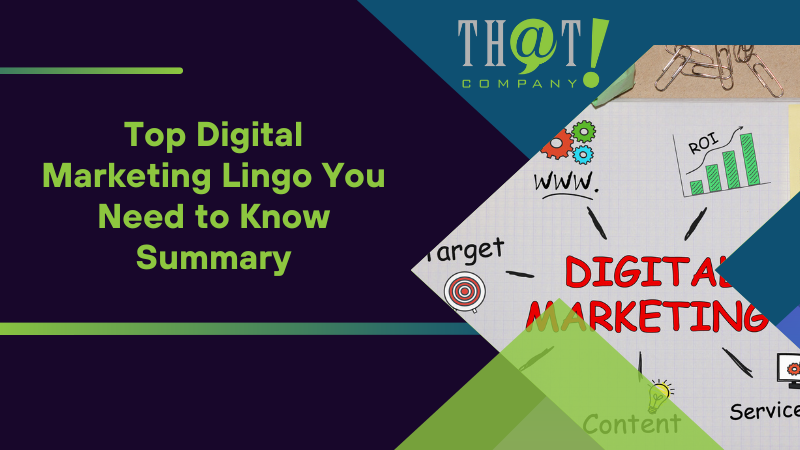
Understanding digital marketing lingo is crucial for effective communication, strategy development, and successful campaign execution. By familiarizing yourself with essential, advanced, and often misunderstood terms, you can navigate the digital marketing landscape with confidence and precision. Continuous learning and staying updated with the latest trends are key to maintaining relevance and effectiveness in this ever-evolving field.
As we move forward into 2025 and beyond, the importance of mastering digital marketing language cannot be overstated. Embrace the knowledge shared in this guide, apply it to your strategies, and watch your marketing efforts yield impressive results. Stay curious, stay informed, and continue to grow as a digital marketer.

Frequently Asked Questions
What are the 5 S’s of digital marketing?
The 5S’s of digital marketing are sell, serve, speak, save, and sizzle, which assist companies in establishing and evaluating their digital marketing objectives effectively. Embracing these elements can enhance overall marketing strategy and performance.
Why is understanding digital marketing terminology important?
Understanding digital marketing terminology is crucial for effective communication among professionals and for developing successful strategies in a constantly evolving landscape. Clarity in terminology facilitates adaptation to changes and enhances collaboration.
What are the benefits of using That! Company’s white label internet marketing services?
Using That! Company’s white label internet marketing services can significantly broaden your service offerings and enhance client retention while leveraging expert knowledge to increase revenue opportunities. This strategic approach allows you to provide comprehensive solutions without the need for in-house expertise.
What is the difference between organic reach and paid reach?
Organic reach is the number of individuals who view content without any paid promotion, whereas paid reach pertains to the visibility gained through advertising expenditure.
What is black hat SEO and why should it be avoided?
Black hat SEO employs unethical tactics to artificially boost search engine rankings, leading to penalties or removal from search results. Thus, it is crucial to avoid these practices to maintain a legitimate online presence.